
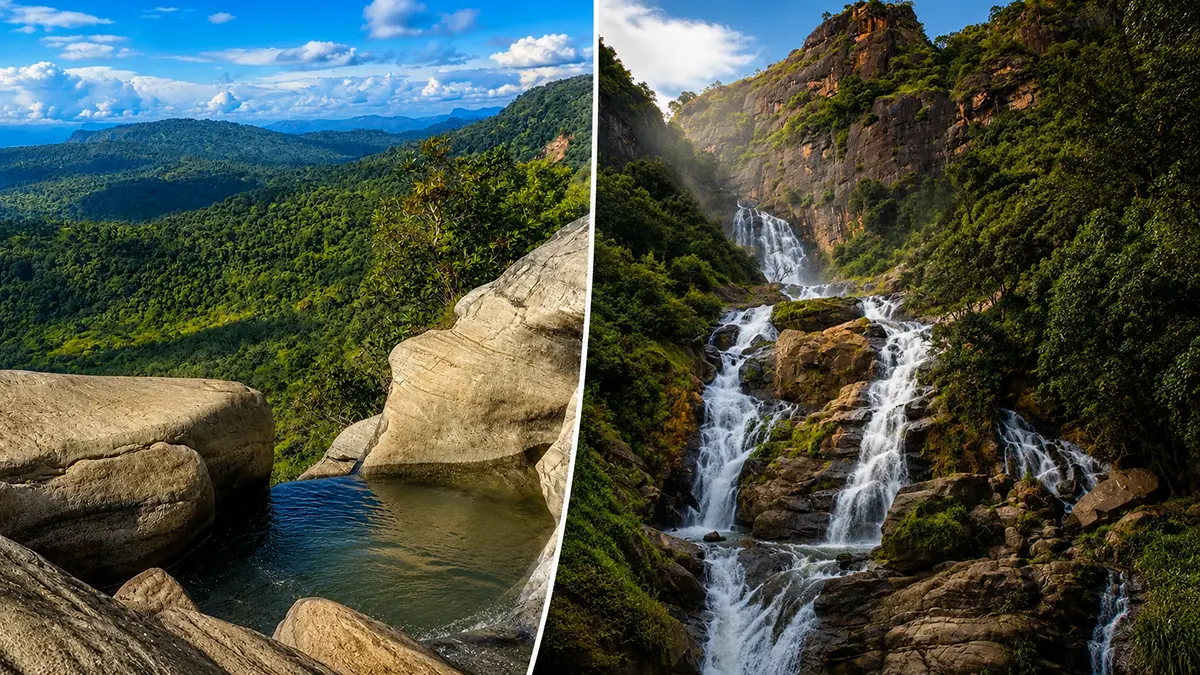
Ravana Falls vs Diyaluma Falls: 10 Things Travelers Should Know
Ella has a waterfall problem, in the best possible way. Two of Sri Lanka’s most photographed cascades sit within an hour of each other, and travelers land in town every day asking the same question: Ravana Falls or Diyaluma Falls, and can you actually do both?
The short answer is yes, you can. But they’re not the same kind of trip, and mixing them up costs people time, money, and occasionally a sunburn they didn’t plan for.
Diyaluma Falls is the taller, wilder, hike-required experience. Ravana Falls, also written as Ravana Ella, is the roadside stop everyone passes on the way to Ella from the south coast. One asks for a couple of hours and sturdy shoes. The other asks for five minutes and a parking spot.
We’ve put together a full comparison based on real hiking notes, local pricing, and the facts that actually matter once you’re standing at the trailhead. For the deep-dive version of either waterfall, our complete Diyaluma Falls guide and our Ravana Falls guide go further than this article can.
Quick Comparison: Diyaluma Falls vs Ravana Falls
| Feature | Diyaluma Falls | Ravana Falls |
|---|---|---|
| Height | 220 m (720 ft) | Roughly 25 m (82 ft) |
| Ranking | 2nd highest waterfall in Sri Lanka | Not ranked among the tallest, but among the most visited |
| Location | Koslanda, Badulla District, on the Colombo–Badulla highway | Ella town, on the Wellawaya–Ella road |
| Distance from Ella | About 30 km (roughly 1–1.5 hours) | About 6 km (10–15 minutes) |
| Access | Hike required, from Poonagala or Koslanda | Visible from the road, no hike needed |
| Swimming | Yes, seasonal, in upper and lower pools | Yes, in a shallow pool at the base |
| Effort level | Moderate to strenuous | Minimal |
| Typical time needed | 2–4 hours | 15–30 minutes |
Diyaluma wins on scale. Ravana wins on convenience. Most travelers end up doing both, just on different mornings.
1. Diyaluma Falls Is Nearly Nine Times Taller Than Ravana Falls
This is the fact that surprises people most. Diyaluma Falls drops 220 meters, or about 720 feet, off a sheer highland cliff. According to Wikipedia, that makes it the second-highest waterfall in Sri Lanka and, remarkably, the 619th highest waterfall in the world.

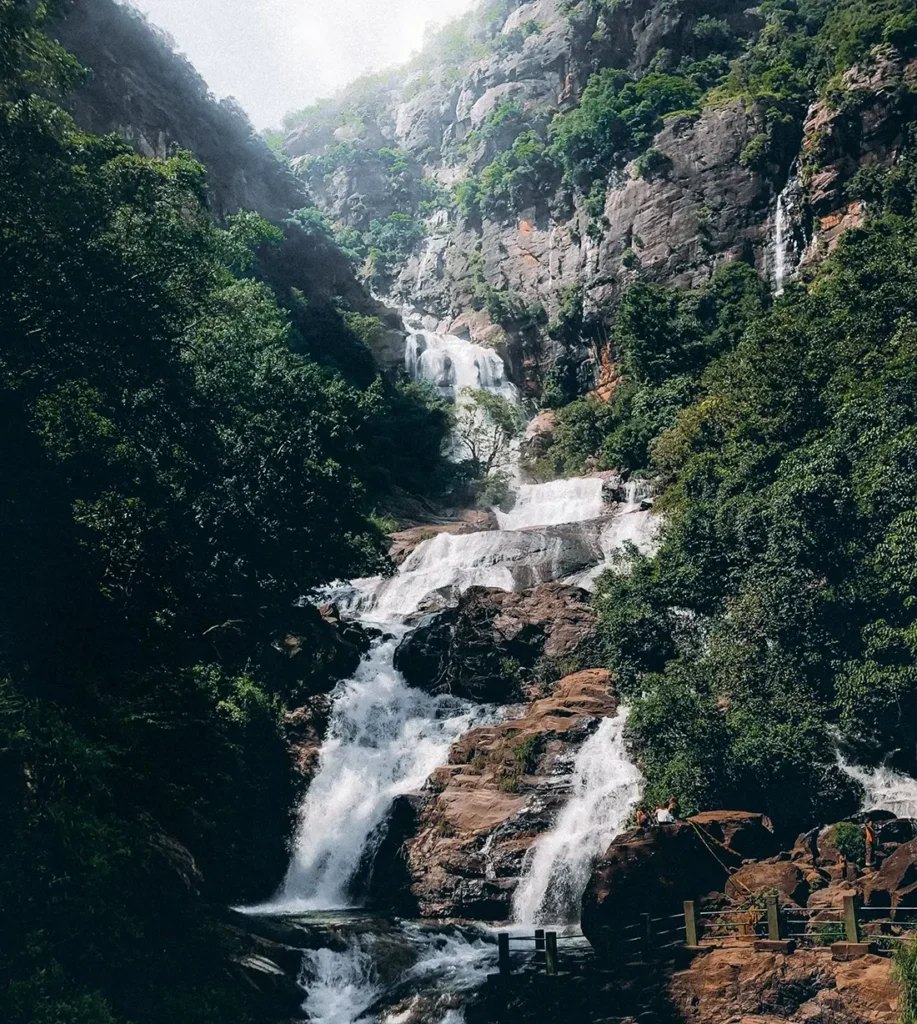
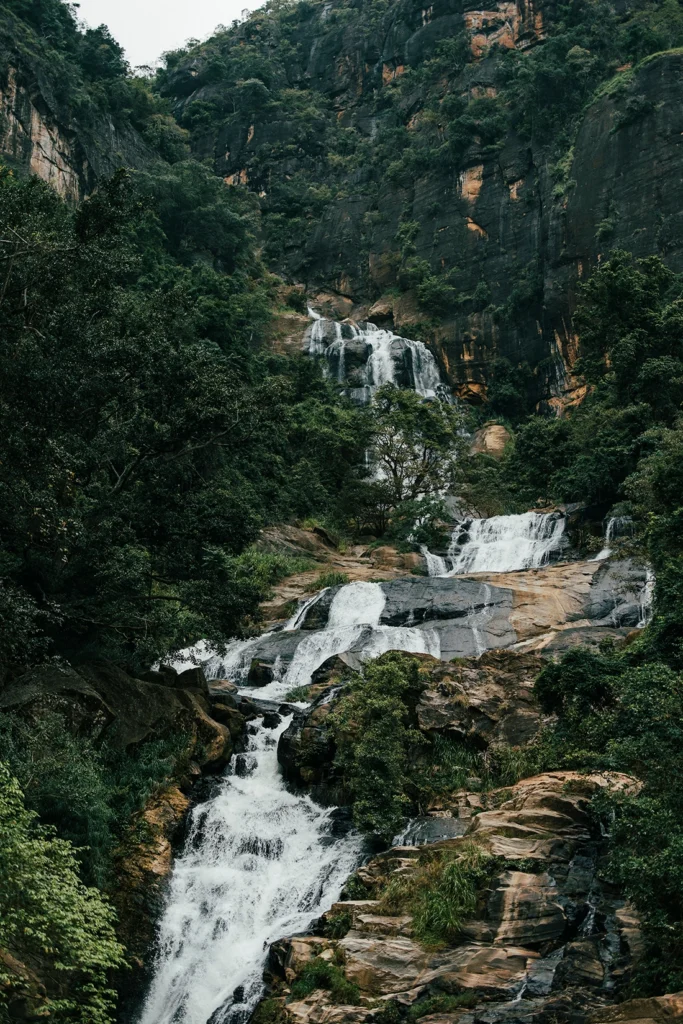
Ravana Falls, by contrast, tumbles a modest 25 meters or so. It’s a pretty, photogenic drop, but it isn’t trying to compete on height. Standing at the base of Diyaluma and then at the base of Ravana on the same day makes the size difference impossible to miss.
2. They Sit on Completely Different Rivers
Diyaluma Falls is fed by the Punagala Oya, a tributary of the Kuda Oya, which itself feeds into the Kirindi Oya. Ravana Falls has its own separate catchment closer to Ella town. Neither waterfall is connected to the other hydrologically, even though they’re often mentioned in the same breath because of their proximity.
3. Diyaluma Requires a Hike. Ravana Doesn’t.
This is the biggest practical difference, and it shapes everything else about planning your day.
Ravana Falls sits right beside the Wellawaya–Ella road. Tuk-tuks pull over, tourists snap a photo, and some walk down a short set of steps to the pool at the bottom. That’s it. No trailhead, no navigation required.
Diyaluma is a bit more split. The lower falls can actually be seen from the road near the bridge close to Koslanda, so you don’t need to hike at all just to view the drop from below. But that roadside view is only half the experience. Reaching the upper falls, where the natural pools and the cliff-edge views are, means walking in either from Poonagala village at the top or up from near Koslanda at the bottom, and both of those routes involve a proper walk. If you’re unsure how to get there, our post on how to get to Diyaluma Falls from Ella breaks down tuk-tuk pricing and the drive itself in more detail.
4. The Hike to Diyaluma Falls Has Two Very Different Trailheads
Most visitors don’t realize Diyaluma can be approached from two directions, and the experience is different depending on which one your driver chooses.
From Poonagala village (top route): This is the shorter and generally easier option. The path winds downhill through dry grassland for roughly 20 to 30 minutes before the upper falls come into view. It’s the route we’d recommend for most travelers, especially anyone short on time or hiking with kids.

From Koslanda (bottom route): This trail climbs uphill for around 20 to 30 minutes and brings you to the base of the falls near the bridge, where you can look straight up at the full 220-meter drop. It’s tougher underfoot, with loose rock and some genuinely rough sections, but the view from below is worth it for photographers.
Full details on gradient, footing, and how each trail compares are in our dedicated post on Diyaluma Falls hiking difficulty.
5. Getting to the Top Pools Isn’t Always Obvious
A common question travelers ask is simply how to reach the upper section without a guide. There’s a specific route past a cluster of houses near Poonagala, across a couple of small streams, and up a rocky, uphill stretch that eventually flattens out near the ridge. It’s walkable without a guide if you’re reasonably fit and go during daylight, though the path isn’t signposted in most places.
If you want turn-by-turn notes rather than a general description, we’ve mapped the whole route in how to get to the top of Diyaluma Falls, including where the concrete track turns to rubble and where drivers usually drop you off.
6. Both Waterfalls Have Swimmable Pools, But They Behave Differently
Ravana Falls has a single shallow pool at its base that’s easy to reach and generally calm, making it popular with families and quick roadside stops.
Diyaluma is more layered. At the top, before the final 220-meter drop, there’s a series of natural pools carved into the rock, some connected, some standing alone. One pool famously sits right at the cliff edge, giving swimmers a view straight down into the valley. We cover the full picture, including which pools are safest and which ones locals treat with caution, in our guide to the Diyaluma Falls infinity pool.

Water conditions at both falls change with the seasons, and that leads directly into the next point.
7. Timing Matters More at Diyaluma Than at Ravana
Ravana Falls flows year-round and rarely becomes unsafe to view or photograph, since there’s no hike and no cliff edge involved.
Diyaluma is more seasonal. During the dry months, roughly January through May, the water flow calms enough that swimming in the upper pools is genuinely enjoyable. During the rainy season, from around September to early December, the current gets strong enough that swimming at the lower falls becomes dangerous, and even the upper pools should be approached with caution. For a month-by-month breakdown, our best time to visit Diyaluma Falls guide is worth reading before you lock in dates.
8. Both Waterfalls Carry Local Legends, and They’re Worth Knowing
Diyaluma’s name comes from the Sinhalese words for “rapid flow of water,” sometimes translated more poetically as “liquid light.” Sri Lankan historian Dr. R. L. Brohier documented a folk tale tied to the falls, about a young chieftain banished to the highlands and the woman who tried to reach him by rope across the cliff face. The story ends in tragedy, and locals say the waterfall itself appeared afterward, a watery veil over the site.
Ravana Falls carries a different kind of story, tied to the Ramayana. Local tradition connects the site to King Ravana and the caves in the surrounding hills, part of the broader mythology that runs through this whole stretch of the Sri Lankan highlands. You can read the fuller account on Ravana Ella’s Wikipedia page.
Neither legend is required reading before you visit, but both add something to standing in front of the water once you know them.
9. Photography Works Very Differently at Each Site
Ravana Falls is an easy, fast photo stop. You get one main angle from the road and a slightly better one from the base, and you’re done in ten minutes.
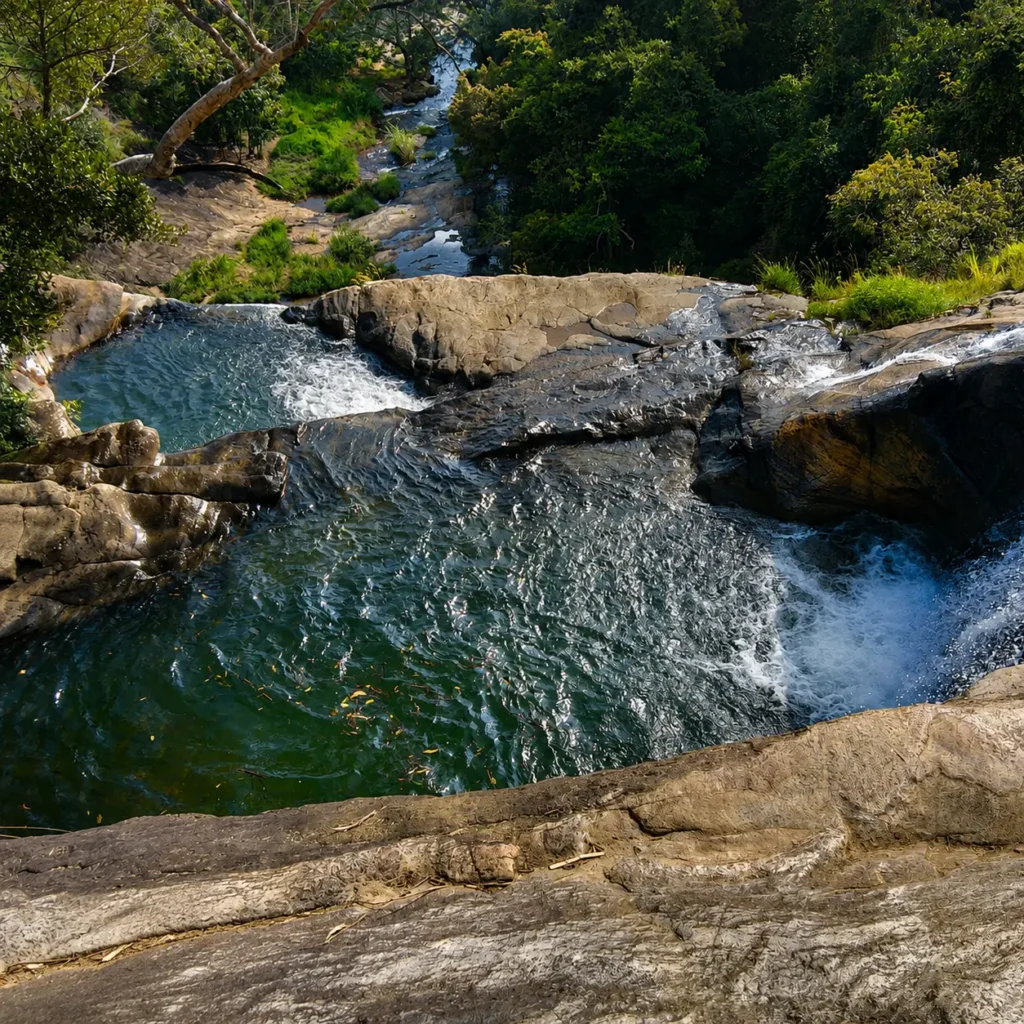
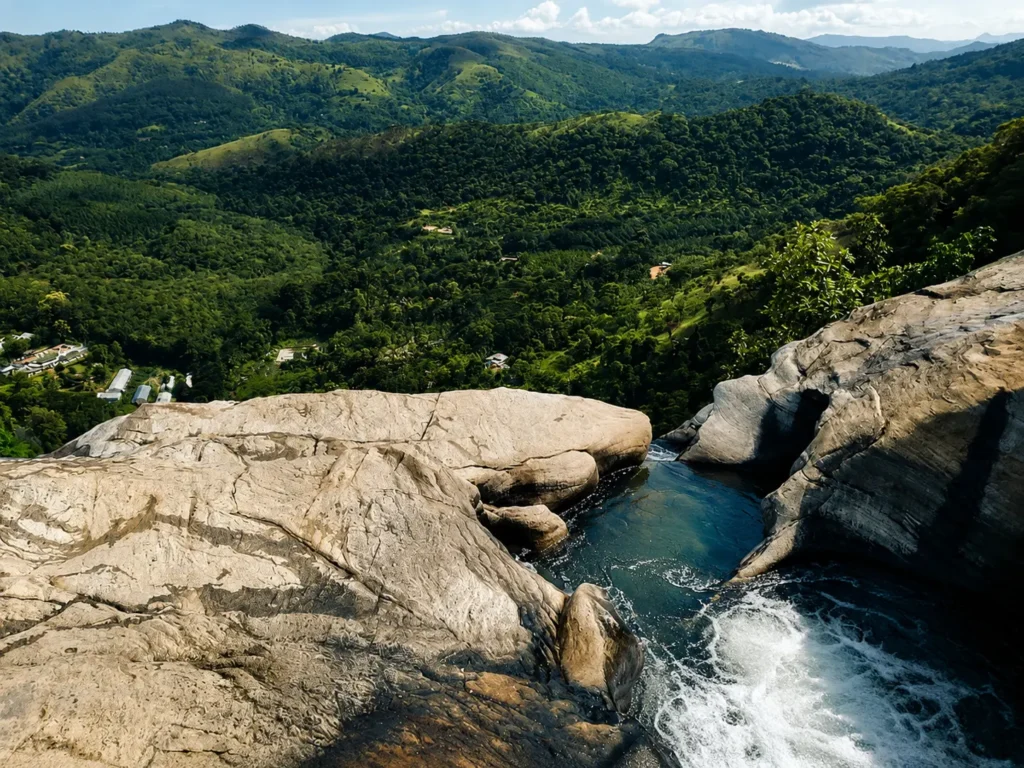
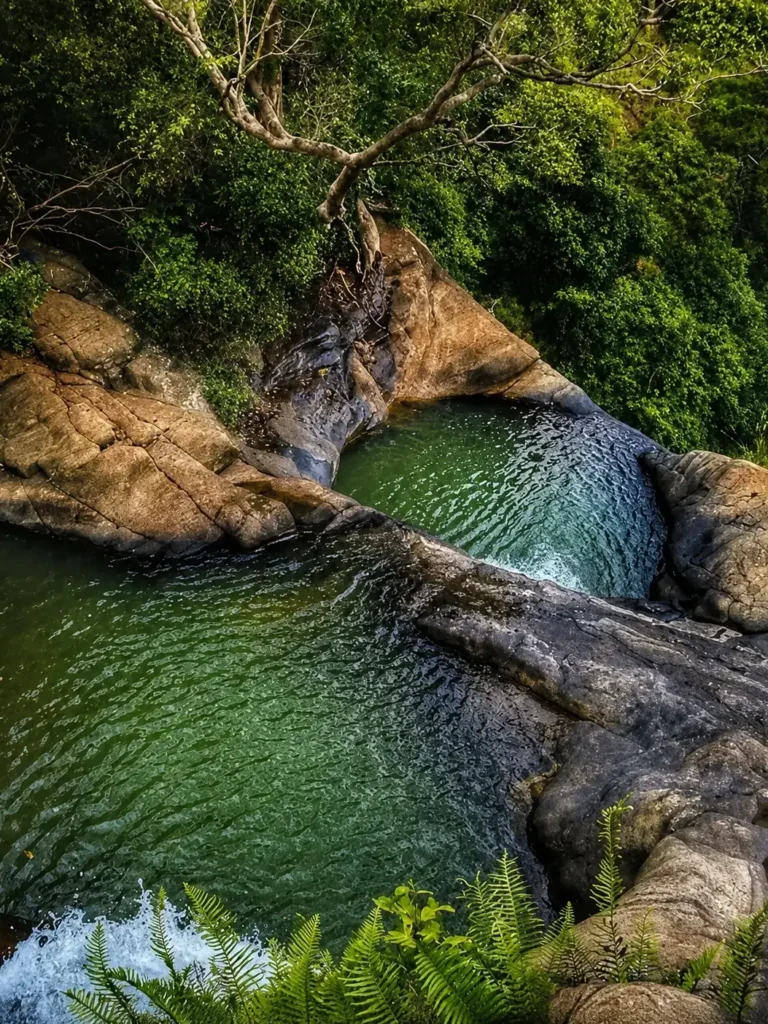
Diyaluma rewards patience. The upper pools, the cliff-edge view, the long drop into the valley, and the surrounding tea country all give photographers multiple distinct shots across a single visit, especially around sunset. If you want a sense of what’s achievable before you go, our Diyaluma waterfall photo gallery has a wide spread of angles from different seasons.
10. Safety Standards Are Not the Same at Both Falls
This is the point worth taking most seriously. Ravana Falls has a relatively contained pool and minimal cliff exposure, so the risk profile is low for most visitors.
Diyaluma Falls has no safety barriers anywhere along the upper trail or around the pools, including the one closest to the 220-meter edge. Locals will tell you not to dive in headfirst, not to swim during the rainy season, and not to get too close to the rim for a photo. All of that advice is worth following. Our full breakdown of what to check before you swim or hike is in the safety guide for the upper Diyaluma Falls hike, and it’s genuinely worth five minutes before you set off.

Should You Visit Both in One Day?
It’s possible, but it’s tight. Ravana Falls takes almost no time, so most people fold it into the drive between Ella and Wellawaya without a second thought. Diyaluma is the one that needs a dedicated block of your day, ideally a full morning or afternoon, plus buffer time for the hike and a break at the top.
If you’re short on time, prioritize Diyaluma. It’s the bigger experience, the better swim, and the one people talk about years later. Ravana Falls is easy to catch on your way past regardless of how your schedule shakes out.
For general planning, our Diyaluma Falls travel tips for visitors and the 25 essential Diyaluma Falls tips cover the smaller logistics, from parking fees to what to pack, that this comparison doesn’t have room for.
Frequently Asked Questions
How tall is Diyaluma Falls compared to Ravana Falls?
Diyaluma Falls is about 220 meters (720 feet) tall, making it Sri Lanka’s second-highest waterfall. Ravana Falls is much shorter, at roughly 25 meters.
Do I need a guide to hike to Diyaluma Falls?
Not necessarily. The trail from Poonagala is walkable without a guide during daylight hours, though some travelers prefer one for the Koslanda route, which is steeper and less clearly marked.
Can you swim at both Diyaluma Falls and Ravana Falls?
Yes. Ravana Falls has a shallow pool at its base that’s safe most of the year. Diyaluma has multiple pools at the top, but swimming there depends heavily on the season and should be avoided during heavy rains.
Is Ravana Falls on the way to Diyaluma Falls from Ella?
Roughly, yes. Ravana Falls sits closer to Ella town, while Diyaluma is further south near Koslanda, so many travelers visit Ravana first and continue on to Diyaluma afterward.
What’s the best time of year to visit Diyaluma Falls?
The dry season, from around January to May, offers calmer water and safer swimming conditions at the upper pools. The rainy season, roughly September to early December, brings much stronger currents.
Which waterfall is better for a quick stop versus a full day trip?
Ravana Falls suits a quick roadside stop of 15 to 30 minutes. Diyaluma Falls is better treated as a half-day trip, with time built in for the hike, the pools, and the walk back.


