
Ravana Falls, Sri Lanka: Complete Guide 2026
Few waterfalls in Sri Lanka come with a backstory as dramatic as Ravana Falls. Tucked into the hills just outside Ella, this wide, tiered cascade is tied directly to one of the most famous legends in South Asian mythology, and it happens to sit right beside the main road, which makes it one of the easiest waterfalls in the country to reach. If you’re building a Sri Lanka itinerary and want to know exactly where Ravana Falls fits among the country’s better-known waterfalls, this guide covers the facts, the folklore, and everything practical you’ll need before you go.
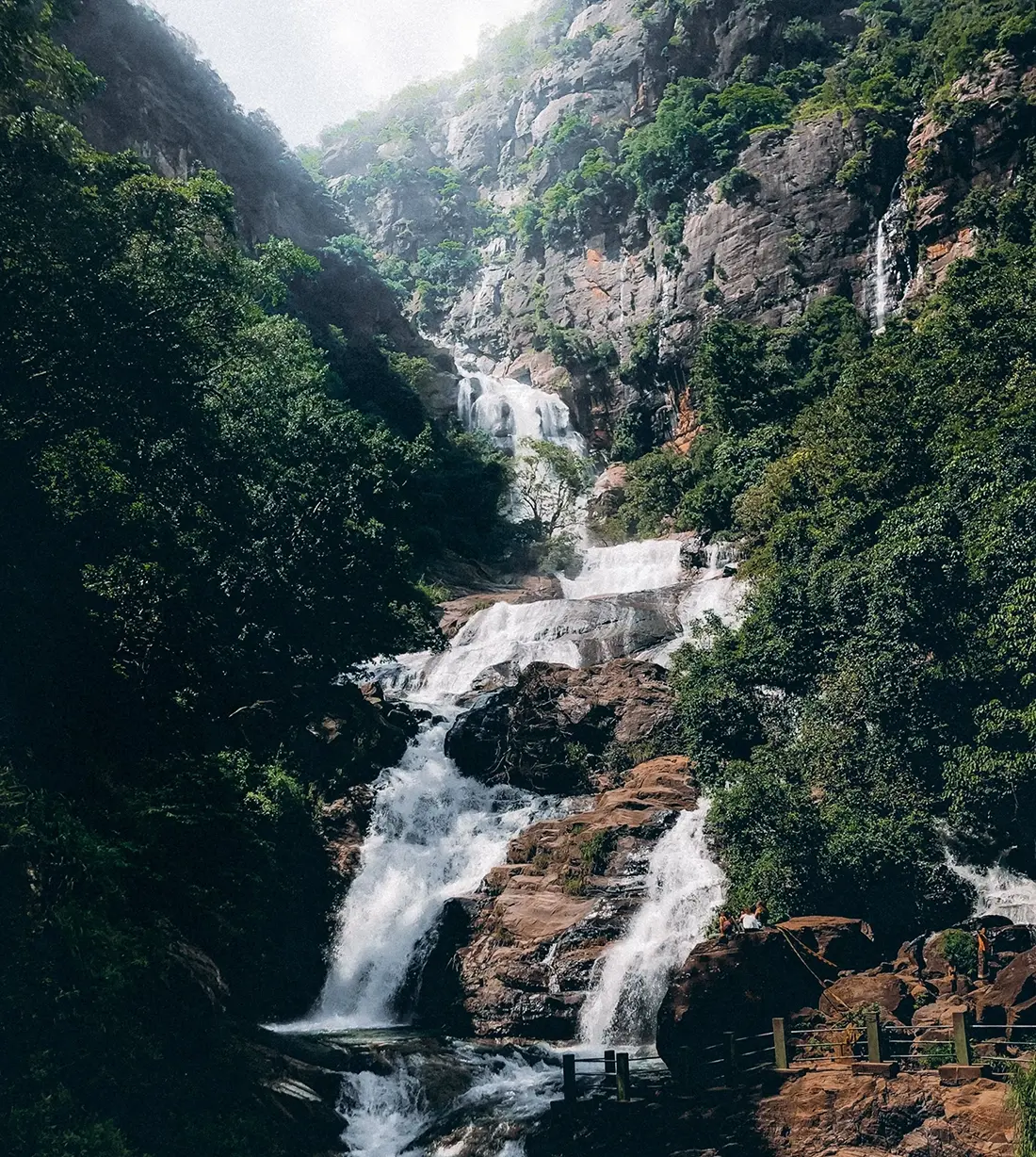
Ravana Falls, also known locally as Ravana Ella or Bambaragala Ella, sits in Sri Lanka’s Uva Province and is considered one of the widest waterfalls in the country. It drops around 25 meters (82 feet) from an oval, concave rock outcrop at an elevation of roughly 1,050 meters (3,445 feet) above sea level. The falls are fed by a tributary of the Kirindi Oya river and form part of the Ravana Ella Wildlife Sanctuary, roughly 6 km from Ella’s railway station along the Ella to Wellawaya road.

Unlike many of Sri Lanka’s waterfalls in Sri Lanka’s hill country, Ravana Falls doesn’t require a long hike to see. You can view it, photograph it, and even swim near its base without leaving the roadside, which is exactly why it appears on almost every Ella day-trip itinerary.
Quick Facts: Ravana Falls
| Fact | Detail |
|---|---|
| Also known as | Ravana Ella, Bambaragala Ella |
| Height | 25 m (82 ft) |
| Elevation | 1,050 m (3,445 ft) |
| Province | Uva Province |
| Nearest town | Ella |
| Distance from Ella | Approx. 6.7 km / 10 to 20 minutes by road |
| River source | Tributary of Kirindi Oya |
| Sanctuary | Ravana Ella Wildlife Sanctuary |
| Access | Roadside, no hiking required |
| Entry fee | Free (small parking or facility fee possible) |
| Swimming | Allowed at the base pool in dry conditions only |

The Legend Behind Ravana Falls
Ravana Falls takes its name from the mythical king Ravana, a central figure in the Indian epic the Ramayana. According to the legend, Ravana, ruler of ancient Lanka, abducted Sita, the wife of Prince Rama, after a conflict involving his sister. He is said to have hidden her in a cave behind this waterfall, now known locally as the Ravana Ella Cave or Sita Cave. Some versions of the story add that Rama’s search party, led by the monkey deity Hanuman, eventually traced her location here and that Ravana himself once played a stringed instrument called the Ravanahatha at this very spot.

The Ramayana is a work of mythology rather than verified history, and most tellings of this legend acknowledge that. Still, the cave behind the falls is a genuine, physical site that visitors can explore, and it adds a layer of cultural weight to a stop that would already be worth making for the scenery alone. If you want to see how this same hill country produced other legendary landmarks, our guide to Diyaluma Falls covers a nearby waterfall with its own local folklore.

Where Is Ravana Falls Located?
Ravana Falls sits just off the Ella to Wellawaya road, close to the 12th to 13th mile markers, in Sri Lanka’s Badulla District. It’s roughly 6 km from Ella town center, which puts it within a short tuk-tuk, taxi, or even scooter ride of almost every guesthouse in Ella. Travelers coming from Colombo or Nuwara Eliya typically pass through Bandarawela and Kumbalwela Junction before reaching the falls, while those coming from Ella simply follow the Wellawaya road south.
Because the falls sit directly beside a main road rather than deep in the hills, they’re one of the most accessible waterfalls in Sri Lanka’s entire hill country and a natural stop to combine with other Ella attractions like the Nine Arch Bridge or Little Adam’s Peak.
How to Get to Ravana Falls
By tuk-tuk or taxi: The simplest option from Ella. The ride takes roughly 10 to 20 minutes depending on traffic, and drivers are used to short return trips here, often combined with other Ella stops in a half-day tour.
By bus: Local buses running between Ella and Wellawaya pass close to the falls. It’s a budget-friendly option, though you’ll want to confirm the exact drop-off point with the conductor.
By scooter or self-drive: Popular with travelers who’ve rented a scooter in Ella for a few days. The road is sealed and in reasonable condition the entire way, making this one of the easier self-guided waterfall trips in the region. Call Shane for bike rentals in the Ella area, Sri Lanka.
On foot: Ambitious walkers sometimes cover the roughly 6 km from Ella on foot along the road, though the tropical heat and lack of shade make this a less comfortable option than the ride options above.
There’s a viewing platform and a small parking area near the base of the falls, and unlike more remote waterfalls in Sri Lanka, no serious hiking or navigation skills are required to see Ravana Falls up close.
What to Do at Ravana Falls

Photograph the Falls from the viewing platform.
A platform near the road gives a clear, unobstructed view of the full cascade, which is especially photogenic just after rainfall when the water volume and mist are at their heaviest.
Swim in the Base Pool
A natural pool has formed at the base of the falls, and swimming here is a popular activity for both locals and visitors during the dry season. Facilities for bathing exist at the site, but conditions change quickly, and this is the single most important safety consideration at Ravana Falls.
Visit the Ravana Ella Cave
A short distance from the falls, the Ravana Ella Cave is tied directly to the Sita legend and is worth the short detour for anyone interested in the mythology behind the waterfall’s name. Archaeological work in caves of this kind across the region has also turned up evidence of much older human habitation, adding a second, non-mythological layer of history to the site.
Pair It With Other Ella Highlights
Since Ravana Falls requires so little time or effort to visit, most travelers combine it with the Nine Arch Bridge, Little Adam’s Peak, or a longer day trip further into the highlands. If your itinerary includes a stop at Sri Lanka’s second-highest waterfall, our how to get to Diyaluma Falls from Ella guide covers that route in detail and pairs naturally with a Ravana Falls stop earlier in the day.
Is It Safe to Swim at Ravana Falls?
Swimming at the base pool is allowed and common, but it comes with a specific risk that catches some visitors off guard: the Kirindi Oya river system that feeds these falls can rise rapidly if it rains upstream, even when the weather at the falls themselves looks calm. Water levels have been known to increase suddenly and without much warning, which is why local advice consistently points to dry-season swimming only.

A few practical safety rules:
- Only swim when the water is visibly calm and clear.
- Avoid the water entirely during or shortly after rainfall, even if it isn’t raining where you’re standing.
- Don’t swim alone, and watch for rising water levels if you’re in the pool for a long time.
- Stick to the designated bathing area rather than climbing onto the rock face itself.
- Keep valuables secured, since the site can get busy with day-trippers.
Best Time to Visit Ravana Falls
Seasonal Conditions Table
| Period | Typical Conditions | Best For |
|---|---|---|
| January to April | Lower water flow, calmer pool | Safer swimming, photography |
| May to August | Variable rainfall, moderate flow | General sightseeing |
| September to December | Heavier rain, higher and faster flow | Viewing only; avoid swimming |
| Early morning | Fewer crowds, softer light | Photography |
Because the falls are fed by a river system rather than a small stream, conditions can shift within the same day. Checking local conditions on arrival is more reliable than planning purely by calendar month.
Ravana Falls vs. Other Waterfalls in Sri Lanka
Ravana Falls is often the first waterfall travelers see in Sri Lanka simply because of how close it sits to Ella, but it’s far from the tallest. For context, here’s how it compares to two of the country’s other major waterfalls:
| Waterfall | Height | Notable For |
|---|---|---|
| Ravana Falls | 25 m (82 ft) | Roadside access, Ramayana legend, and the widest falls in the country |
| Diyaluma Falls | 220 m (720 ft) | Second-highest waterfall in Sri Lanka, cliff-top infinity pools |
| Bambarakanda Falls | 263 m (863 ft) | Tallest waterfall in Sri Lanka |
If Ravana Falls leaves you wanting more dramatic scenery, Diyaluma Falls is a natural next stop, with its own natural infinity pools perched at the top of a 220-meter drop. For a full breakdown of that hike, see our guides on reaching the top of Diyaluma Falls and the safety considerations at the upper trail. Independent travelers who’ve covered both waterfalls, including the writeups at The Common Wanderer and Julia’s Day Off, often treat Ravana Falls as a quick morning stop before tackling the longer Diyaluma hike later in the day.
Where to Stay Near Ravana Falls
Ella is the obvious base, with guesthouses and hotels for every budget within a short ride of the falls. Staying in Ella also puts you within reach of the Nine Arch Bridge, Little Adam’s Peak, and the trailheads for Diyaluma Falls, so most multi-day highland itineraries are built around this single town.
Frequently Asked Questions
How tall is Ravana Falls?
Ravana Falls measures approximately 25 meters (82 feet) in height, making it one of the widest, rather than tallest, waterfalls in Sri Lanka.
Is Ravana Falls the same as Ravana Ella?
Yes. Ravana Falls and Ravana Ella refer to the same waterfall, and it’s also occasionally called Bambaragala Ella by locals.
Is it safe to swim at Ravana Falls?
Swimming is allowed and popular in the base pool during dry, calm conditions, but the river can rise quickly after rain further upstream, so it’s best to avoid the water during or right after rainfall.
How far is Ravana Falls from Ella?
Ravana Falls is roughly 6 km from Ella town, about a 10 to 20 minute ride by tuk-tuk, taxi, or scooter.
What is the legend behind Ravana Falls?
The falls are named after King Ravana from the Ramayana, who is said to have hidden Princess Sita in a cave behind the waterfall, now known as the Ravana Ella Cave.
Is Ravana Falls worth visiting if I’m also going to Diyaluma Falls?
Yes. Ravana Falls takes very little time to see and works well as a quick morning stop, while Diyaluma Falls is a longer, more involved trip better suited to a half or full day


