
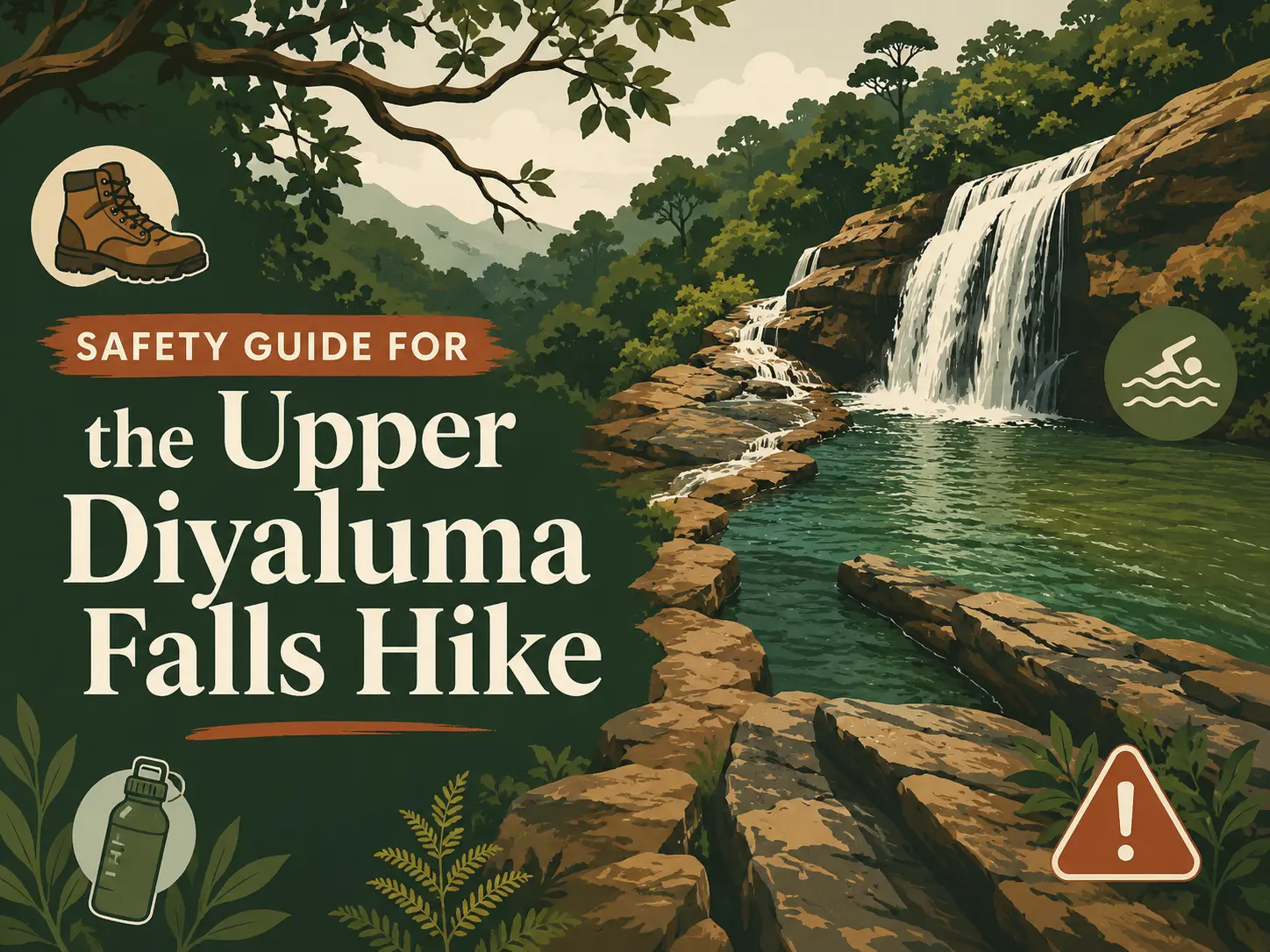
Safety Guide for the Upper Diyaluma Falls Hike
Upper Diyaluma Falls is one of Sri Lanka’s most rewarding hikes. Natural infinity pools wait at the top, along with sweeping valley views that make the climb worth every step. But like any hike involving cliffs, water, and changeable terrain, a few precautions go a long way toward keeping the visit safe and enjoyable.
This guide covers exactly what to know before setting out, from wildlife concerns to swimming conditions to what belongs in your daypack.
What About the Elephants?
It’s a question almost every visitor asks. Wild elephants are known to live in the wider Diyaluma area, and warnings about them tend to circulate online.
The reality, according to local residents, is more reassuring than it sounds. The small number of elephants nearby are usually active at night, not during the day. Daytime sightings are uncommon. That said, wildlife can never be completely ruled out in an area like this, so a few simple habits reduce the risk further:
- Start the hike early in the day, rather than late afternoon or evening
- Stay on the marked trail rather than wandering off it
- Avoid hiking after dark under any circumstances
Followed together, these habits make an elephant encounter genuinely unlikely.
Do You Need a Guide?
Most visitors don’t. The trail up to Upper Diyaluma Falls is generally easy to follow, and it’s shared with plenty of other hikers throughout the day, which makes it hard to lose.
Local guides are available at the trailhead, and some visitors choose to hire one anyway. It’s worth being clear about what they actually offer, though: guides are there mainly to help with navigation and answer questions about the route, not to provide protection from wildlife or guarantee safety at the pools. Personal caution still matters just as much with a guide as without one.
A Safety Checklist for the Hike
A few habits make the biggest difference between a smooth visit and an uncomfortable one.
- Start in the morning or early afternoon. This avoids both the midday heat and the tail end of daylight, when the trail becomes harder to navigate safely.
- Carry plenty of drinking water. No shops are found once the trailhead is left behind, so everything needed for the hike should be brought along in advance.
- Pack snacks if time is planned at the pools once the top is reached. It’s easy to stay longer than expected once the views set in.
- Wear shoes with good grip. Sections of the trail turn rocky and slippery, and proper footwear matters more here than almost anything else on this list.
- Stay away from cliff edges, and avoid standing on wet rocks anywhere near the falls. Footing here is far less reliable than it looks.
- Never swim close to the edge of the falls, and avoid swimming altogether during heavy rain, when water levels and currents can rise quickly and without much warning.
- Keep an eye on the weather. If conditions look unsafe, the hike is better postponed than pushed through.
- Leave no litter behind. This is a natural, largely unmanaged site, and it stays that way only if visitors treat it with care.
Why Water Conditions Matter So Much
The pools at the top of Diyaluma are naturally carved into rock, and their safety shifts with the seasons. During drier months, most pools are calm enough for a comfortable swim. During and after heavy rain, that changes fast — currents strengthen, water levels rise, and pools that felt safe the week before can become genuinely dangerous.
This is one of the main reasons a guide isn’t a substitute for personal judgment. Conditions can shift within days, and the safest approach is always to check with someone local on the day of the visit, rather than relying on general seasonal advice alone.
Footwear and Footing
A large share of hiking injuries at spots like this come down to one thing: slippery rock. The trail itself includes stretches of loose stone, and the areas immediately around the pools are often wet, smooth, and easy to misjudge underfoot.
Closed-toe shoes with real grip are worth prioritizing over sandals or flip-flops, even though it’s tempting to hike light in warm weather. A short, careful walk beats a rushed one every time on this kind of terrain.
Timing the Hike Right
Morning starts are recommended for more than just the heat. Trails are generally quieter earlier in the day, footing is easier to judge in good daylight, and there’s more buffer time built in if the hike takes longer than expected.
Avoid finishing the hike after dark. Between uneven terrain, the small chance of wildlife activity, and the simple difficulty of navigating unfamiliar ground without daylight, an early finish is one of the easiest ways to keep the entire visit low-risk.
Final Thoughts
None of this is meant to make the Upper Diyaluma Falls hike sound more dangerous than it is. For the vast majority of visitors, it’s a safe, manageable, and genuinely unforgettable experience. The precautions above aren’t complicated — good shoes, enough water, an early start, and a bit of caution near the water’s edge cover most of what matters.
With a little preparation and common sense, this remains one of the best hikes in Sri Lanka’s hill country, and one most visitors finish wishing they’d stayed even longer.


