
Best Time to Visit Diyaluma Falls: Weather Guide
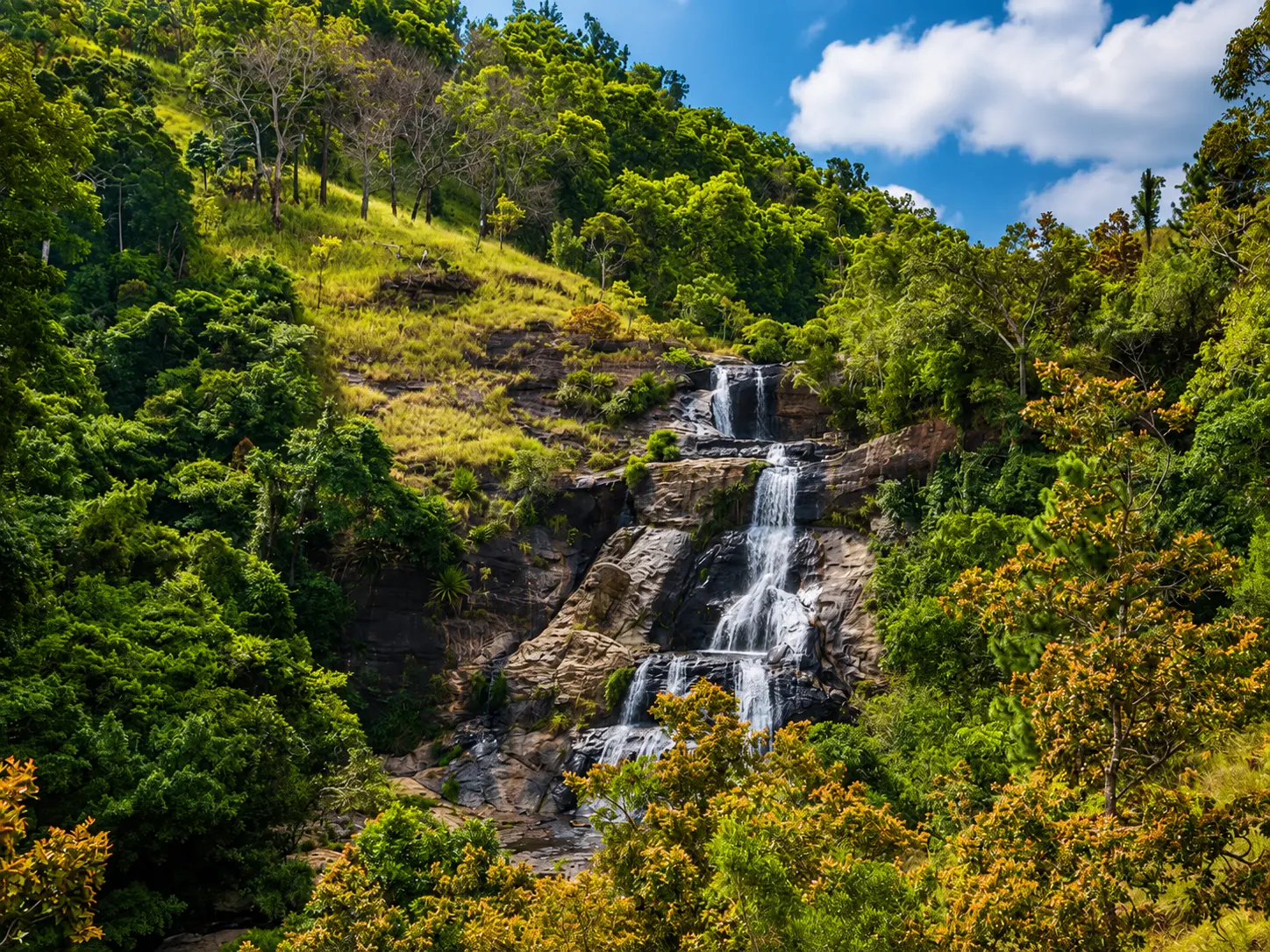
Diyaluma Falls looks different depending on when you show up. Visit in the wrong month and you’ll find a swollen, muddy torrent that’s too dangerous to approach, let alone swim in. Visit in the right window and you’ll find calm, clear pools sitting right at the edge of a 220-meter drop, exactly the scene that makes this waterfall so popular on Instagram and Pinterest.
So when is actually the best time to visit Diyaluma Falls? The short answer is between January and April, with December and early May as reasonable backups. The longer answer depends on whether you’re chasing dramatic photos of the full waterfall in flood or calm swimming conditions in the upper pools. This guide breaks the year down month by month so you can plan around it.
Diyaluma Falls is Sri Lanka’s second-highest waterfall, dropping 220 meters (720 feet) in the Badulla District, about 6 km from Koslanda on the Colombo to Badulla highway. It’s fed by the Punagala Oya, a tributary that eventually joins the wider Kirindi Oya river system, and its name comes from the Sinhalese phrase for “rapid flow of water,” sometimes translated poetically as “liquid light.” Sri Lankan historian Dr. R. L. Brohier recorded a local folk tale about the falls involving a young chieftain and his betrothed, a story that gave the site its evocative name. If you haven’t yet, it’s worth reading our complete guide to the Diyaluma Falls infinity pool before you plan the timing of your visit.
Understanding Sri Lanka’s Two Monsoon Seasons
Sri Lanka’s weather is shaped by two separate monsoon systems, and the hill country around Diyaluma sits in an unusual position between them.
The southwest monsoon runs roughly from May to September and mostly soaks the island’s western and southwestern coasts. The northeast monsoon runs from October through January and affects the east and parts of the hill country, including the Uva Province, where Diyaluma is located. Because the falls sit close to this monsoon boundary, both wet periods can raise water levels at different points in the year, which is part of why timing your visit matters more here than at some other Sri Lankan attractions.
The Ella and Koslanda area also gets its own local pattern of afternoon showers even during the broader dry season, especially from April into early May, when heat and humidity build up before the southwest monsoon arrives.
Diyaluma Falls Weather and Swim Conditions by Month
Month-by-Month Table
| Month | General Conditions | Waterfall Flow | Swimming in Upper Pools |
|---|---|---|---|
| January | Cool mornings, drier air, clearer skies | Moderate, settling after the northeast monsoon | Good |
| February | Driest and sunniest stretch of the year | Low to moderate | Very good |
| March | Warm days, occasional short showers | Low | Very good |
| April | Hot, humid, increasing afternoon storms | Low, rising late in the month | Good, check conditions daily |
| May | Transition into the southwest monsoon | Rising | Good, check conditions daily |
| June | The southwest monsoon active on the coast; hill country more mixed | Variable | Check conditions daily |
| July | Wetter spells possible, cooler evenings | Variable | Caution: check conditions daily |
| August | Similar to July, occasional clear days | Variable | Caution: check conditions daily |
| September | Early signs of the northeast monsoon building | Rising | Caution: Check conditions daily |
| October | Northeast monsoon strengthens | High | Caution: Not recommended |
| November | Wettest month of the year in the wider Ella area | Very high, forceful | Caution: Not recommended |
| December | Rainfall begins easing off | High, gradually dropping | Caution: Not recommended |
Treat this table as a general planning guide rather than a guarantee. Sri Lanka’s hill country microclimates shift quickly, and rainfall further upstream can raise the Punagala Oya even on a dry day at the falls themselves.
Season Summary Table
| Season | Months | Best For | Watch Out For |
|---|---|---|---|
| Dry Season | January to April | Swimming, clear photos, easier hiking | Crowds during peak weeks, strong midday sun |
| Inter-Monsoon Transition | May, September | Fewer crowds, greener landscape | Sudden afternoon storms, unpredictable water levels |
| Southwest Monsoon Window | June to August | Quieter trails, dramatic clouds | Slippery paths, reduced visibility on some days |
| Northeast Monsoon | October to early December | Watching the waterfall at full, powerful flow from a safe distance | No swimming, muddy trail conditions |
Best Months to Visit for Swimming
If your main goal is a swim in the Diyaluma Falls infinity pool, aim for January through April. This is the window most travel writers, including the team behind The Common Wanderer’s Diyaluma guide, point to for calmer water and safer conditions in the upper pools. February and March tend to offer the most consistent combination of low rainfall and manageable heat, making them the sweet spot for most visitors.
Even within this window, always check conditions with locals or your tuk-tuk driver on the day. A storm further up the catchment area can raise the Punagala Oya within hours, even if the sky above Poonagala looks clear.
Best Months to Visit for Photography and Views
If swimming isn’t the priority and you’d rather capture the full drama of a 220-meter waterfall in flood, the shoulder months around the northeast monsoon can actually work in your favor from a viewing distance. October and early November bring a heavier, more powerful flow that photographs dramatically from the lower viewpoint near Diyaluma Falls Bridge, though this is strictly a look-don’t-swim period. The team at Julia’s Day Off visited during a wetter stretch and found the volume of water impressive, even though it ruled out swimming for their trip.
For golden hour photography at the top of the falls, plan for late afternoon year-round, but especially during the dry season when skies are less likely to cloud over before sunset.
Worst Months to Visit
November is generally the toughest month to plan around. It tends to bring the heaviest rainfall of the year to the wider Ella and Badulla area, and the trail down from Poonagala can turn slick and muddy. Water levels at the falls are typically at their highest and most forceful, which rules out any swimming and can make even the lower viewpoint hike unpleasant.
October and early December aren’t far behind. If your trip dates are fixed and happen to fall in this window, it’s still possible to visit safely as long as you stick to the designated viewpoints and skip the pools entirely.
How Weather Affects the Hike Itself
Rain doesn’t just change the water in the pools, it changes the trail. The path from Poonagala to the upper falls runs through open grassland and rocky sections that can become slippery and hard to navigate after rain, as noted in the trail notes from Walk My World’s hiking guide. During the dry season, the same path is dusty but far more stable underfoot.
If you’re visiting during a wetter month, plan for:
- Extra time on the trail, since footing is slower on wet rock
- Proper grip on your shoes rather than sandals
- A dry bag for your phone and camera
- A backup plan to view the falls from the road-accessible bridge if the upper trail looks unsafe
For a full walkthrough of both trailheads, see our guide on how to get to the top of Diyaluma Falls and our separate route notes on getting to Diyaluma Falls from Ella.
Planning Around the Weather: A Simple Framework
If you only remember one rule from this guide, make it this one: check the water, not just the calendar. Monthly averages are a helpful starting point, but the Punagala Oya can rise or fall within a single day depending on rainfall further inland.
A simple decision framework for your trip:
- Check the general season using the tables above.
- Confirm recent rainfall with your guesthouse in Ella a day or two before your visit.
- Ask locals near the trailhead about current water levels on the morning you arrive.
- If the water looks fast, brown, or higher than usual, stay out of the upper pools and enjoy the view instead.
This kind of local, same-day check matters more at Diyaluma than at almost any other waterfall in Sri Lanka’s hill country, simply because there are no barriers and the consequences of misjudging the water are severe.
What to Pack Depending on the Season
- Dry season (Jan to Apr): swimwear, reef-safe sunscreen, a hat, and plenty of water for the heat.
- Transition months (May, Sep): a light rain jacket in addition to swim gear, since afternoon storms can appear quickly.
- Wetter months (Jun to Aug, Oct to Dec): waterproof footwear, a dry bag, and a plan that doesn’t depend on swimming.
More Diyaluma Falls Planning Resources
For a broader look at transport prices, opening details, and general trip planning, see our 2026 travel tips guide. If you want to see what the upper pools and surrounding scenery actually look like before you commit to a date, our photo gallery of Diyaluma Waterfall is a good place to start, and our full site index links out to every guide we’ve published on the falls, including our dedicated notes on Upper Diyaluma and our safety guide for the upper Diyaluma Falls hike.
Frequently Asked Questions
What is the single best month to visit Diyaluma Falls? February is generally considered the strongest single month, combining low rainfall, clearer skies, and calmer water in the upper pools.
Can you swim at Diyaluma Falls in December? Early December often still carries leftover rainfall from the northeast monsoon, so swimming isn’t usually recommended until conditions ease later in the month. Always check locally before entering the water.
Is Diyaluma Falls worth visiting during the rainy season? Yes, for viewing rather than swimming. The waterfall itself looks more dramatic with heavier flow, and the lower viewpoint near the bridge is still accessible. Just skip the upper pools entirely during this period.
How does the weather at Diyaluma compare to Ella town? Diyaluma sits at a lower elevation than Ella and tends to feel warmer and more humid, though both locations are influenced by the same broader monsoon patterns.
Does it rain every day during the wet season? Not necessarily. Even in wetter months, some days stay dry, but rainfall upstream can still raise water levels at the falls even without rain falling directly on the trail that day.
Is there a specific time of day that’s safer for swimming? Weather matters more than time of day, but visiting earlier in the day gives you more daylight to assess conditions and turn back if the water looks unsafe.


