
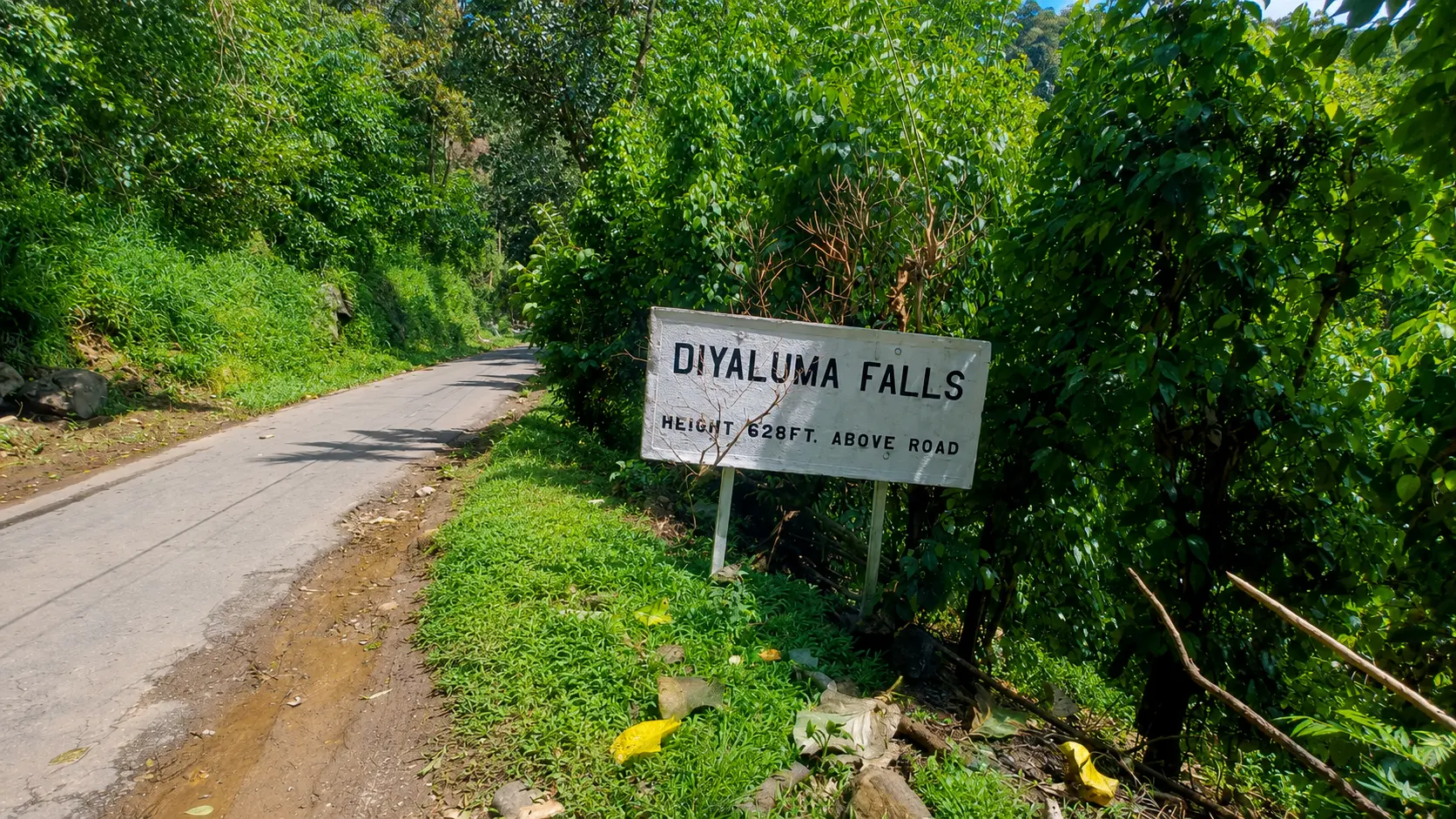
25 Essential Diyaluma Falls Tips Before You Go
Diyaluma Falls is one of Sri Lanka’s most rewarding day trips and also one of its most misunderstood. Photos of the cliff-edge infinity pools travel fast on Pinterest and Instagram, but the practical details—how to get there, what it costs, and how to stay safe—rarely make it into the caption.
This guide fixes that. Below are 25 essential Diyaluma Falls tips covering planning, transport, the hike itself, and safety at the top, so the visit matches the photos.

Quick Facts About Diyaluma Falls
Diyaluma Falls drops 220 meters (720 feet), making it the second highest waterfall in Sri Lanka and the 619th highest waterfall in the world. The falls sit about 6 kilometers from Koslanda in the Badulla District, right off the Colombo–Badulla highway, and are fed by Punagala Oya, a tributary that eventually joins the Kirindi Oya river system.
The name itself carries a story. In Sinhalese, “Diyaluma” roughly translates to “rapid flow of water” or “liquid light.” Sri Lankan historian Dr. R.L. Brohier connected the name to a local legend about a tragic escape attempt on the escarpment above the falls, with the water said to have appeared as a curtain over the scene. The full folklore and further sourcing can be found on the Diyaluma Falls Wikipedia page.
Table 1: Diyaluma Falls at a Glance
| Detail | Information |
|---|---|
| Height | 220 m (720 ft) |
| Ranking | 2nd highest waterfall in Sri Lanka |
| Location | Koslanda, Badulla District, Uva Province |
| Distance from Ella | Approx. 30 km (roughly 1–2 hours by road) |
| River source | Punagala Oya (tributary of Kirindi Oya) |
| Entrance fee | LKR 350 at the trail ticket counter (lower falls free from the A4 road) |
| Best months | January to May |
| Wettest months | September to early December |
Before You Go: Planning Tips
1. Decide which route you’re hiking first.

There are two main approaches to Diyaluma Falls: down from Poonagala village at the top or up from Koslanda near the base. The Poonagala route is shorter and gentler; the Koslanda route is steeper but ends at a dramatic bridge viewpoint. Compare both in this guide to hiking Diyaluma Falls without a guide.
2. Base yourself in Ella.

Most visitors treat Diyaluma Falls as a half-day or full-day trip from Ella, which has the widest range of accommodation, restaurants, and tuk-tuk drivers familiar with the route.
3. Check the season before booking.

Water volume changes dramatically between wet and dry months, which affects both swimming and photography. See the month-by-month breakdown in Table 2 below.
4. Download an offline map.

Mobile signal is patchy once the trail leaves the main road. Save the trailhead location on Google Maps before losing Wi-Fi, a tip echoed in most Diyaluma Falls guides written by past visitors.
5. Budget for a half-day to full-day trip.

Between transport, the hike, and time at the top, a proper Diyaluma Falls visit rarely takes less than four hours round trip from Ella.
6. Read a dedicated 2026 planning guide.

For a full rundown of fees, packing lists, and seasonal advice, this Diyaluma Falls travel tips guide for 2026 covers the latest updates.
Getting Diyaluma Falls
7. Tuk-tuk is the most common option.

A return tuk-tuk from Ella to the Poonagala trailhead typically costs between LKR 3,500 and 5,000, and most drivers already know the route.
8. Confirm you want the upper trailhead.

Tell the driver explicitly that the destination is the upper Diyaluma Falls trail via Poonagala, since there’s more than one drop-off point near the falls.
9. Renting a scooter gives more flexibility.

Confident riders can self-drive to Poonagala or Koslanda, though the final stretch of road is rough and better suited to bikes and tuk-tuks than cars.
10. Private car transfers work for larger groups.

They cost more than a tuk-tuk but remove the need to negotiate a return fare.
11. A full breakdown of every option lives here.

For exact pricing across tuk-tuks, scooters, private cars, and buses, see this complete guide on getting to Diyaluma Falls from Ella.
Table 2: Transport Options Compared
| Option | Cost (return, from Ella) | Travel Time | Best For |
|---|---|---|---|
| Tuk-tuk | LKR 3,500–5,000 | 1–2 hours each way | Most travelers, door-to-trailhead |
| Private car | Higher, varies by driver | 1–1.5 hours each way | Groups, comfort |
| Scooter (self-drive) | Rental cost only | 1–1.5 hours each way | Confident, experienced riders |
| Public bus + walk | Lowest cost | 2+ hours with transfers | Budget travelers, more time |
Hiking Tips for Upper Diyaluma
12. The Poonagala walk is short but uneven.

From the village, the path runs downhill through dry grassland for roughly 20–30 minutes before the upper falls come into view.
13. Wear proper footwear.

The trail is unmarked, occasionally overgrown, and rocky in sections. Closed shoes with grip make a real difference over sandals.
14. Follow the sound of the water.

The path isn’t signposted, but the trail is easy to follow, and the rush of falling water gets louder as the upper falls approach.
15. The Koslanda side trail is steeper.

Hiking up from the base takes closer to 30–45 minutes and involves scrambling over boulders, but it ends at a striking bridge viewpoint of the full 220-meter drop.
16. Bring your own snacks and water.

There’s little to buy once past the lower trailhead, though small stalls near Koslanda sell coconuts and snacks for the walk back.
At the Falls: What to Do and Safety
17. Visit the upper pools first.

The upper section of Diyaluma Falls has several natural pools at different levels, generally calmer and safer for a swim than the cliff-edge pool below. Full details are in this upper Diyaluma Falls guide.
18. Only swim in the dry season.

Between roughly January and May, water levels drop enough for safe swimming. During the wetter months, currents are far stronger, and swimming is not advisable.
19. There are no safety barriers.

None of the pools or ledges at Diyaluma Falls have railings. Anyone walking near the edge, especially with kids, should stay well back from wet or mossy rock.
20. Ask locals about conditions on the day.

Water levels can change quickly after rain upstream, so a quick check with a guide or tuk-tuk driver before swimming is worth the minute it takes.
21. Review a dedicated safety guide before hiking.

For a full list of precautions specific to the upper trail, this Diyaluma Falls upper hike safety guide is worth reading in advance.
Practical Extras Tips
22. A guide is optional, not mandatory.

Most travelers complete the Poonagala hike without one, especially in daylight with a companion. Guides at the Koslanda side sometimes offer their services for a small fee, which is a personal choice rather than a requirement.
23. Pack for both sun and rain.

Weather shifts quickly in the highlands. Sun protection, a light rain layer, and a refillable water bottle cover most conditions.
24. Time the visit for sunset if possible.

Late afternoon light over the valley below the falls is one of the best photo opportunities in the area, and the crowds thin out as the day goes on.
25. Browse real photos before deciding what to pack.

Seeing the terrain and pool conditions in advance helps with footwear and camera gear choices. This Diyaluma Falls photo gallery is a useful preview, and independent trip reports like this Diyaluma Falls account add a first-hand perspective.
Best Time to Visit Diyaluma Falls
The dry season, from January through May, is generally the safest and most rewarding window. Water levels are lower, the pools are calmer, and swimming is realistic. From September through early December, heavier rain upstream increases the flow and makes the lower falls unsafe for swimming, though the views remain dramatic from a distance. Check the full article of the weather guide at the Diyaluma Falls.
How Long Does the Diyaluma Falls Hike Take?
From Poonagala, the walk to the upper falls takes around 20–30 minutes each way. Adding time at the pools and the return walk, most visitors spend 2–4 hours total at the site, not counting transport from Ella. For a full walkthrough of reaching the very top of the falls, see how to get to the top of Diyaluma Falls.
Frequently Asked Questions
Is Diyaluma Falls worth visiting?
Yes. As Sri Lanka’s second highest waterfall, with cliff-edge natural pools and views over the surrounding valley, it’s consistently ranked among the top day trips from Ella.
How much is the entrance fee for Diyaluma Falls?
The ticket counter on the main trail charges LKR 350. The lower falls viewpoint reached from the A4 road is free to access.
Is it safe to swim at Diyaluma Falls?
Swimming is generally safer in the dry season (January–May) in the upper pools, with extra caution near the cliff edge. During the rainy season, swimming isn’t recommended due to strong currents.
Can you visit Diyaluma Falls without a guide?
Yes, most travelers hike the Poonagala route without a guide, since the path is unmarked but straightforward to follow.
How far is Diyaluma Falls from Ella?
It’s roughly 39.7 km, translating to a 1–2 hour drive depending on the vehicle and road conditions.
Which is better, upper or lower Diyaluma Falls?
They offer different experiences. The upper falls have swimmable pools and cliff-edge views, while the lower falls, seen from near Koslanda, showcase the full 220-meter drop from below.
For a broader overview of the whole area, the diyalumafallsguide.com homepage links out to every route, safety, and seasonal guide referenced above.


