
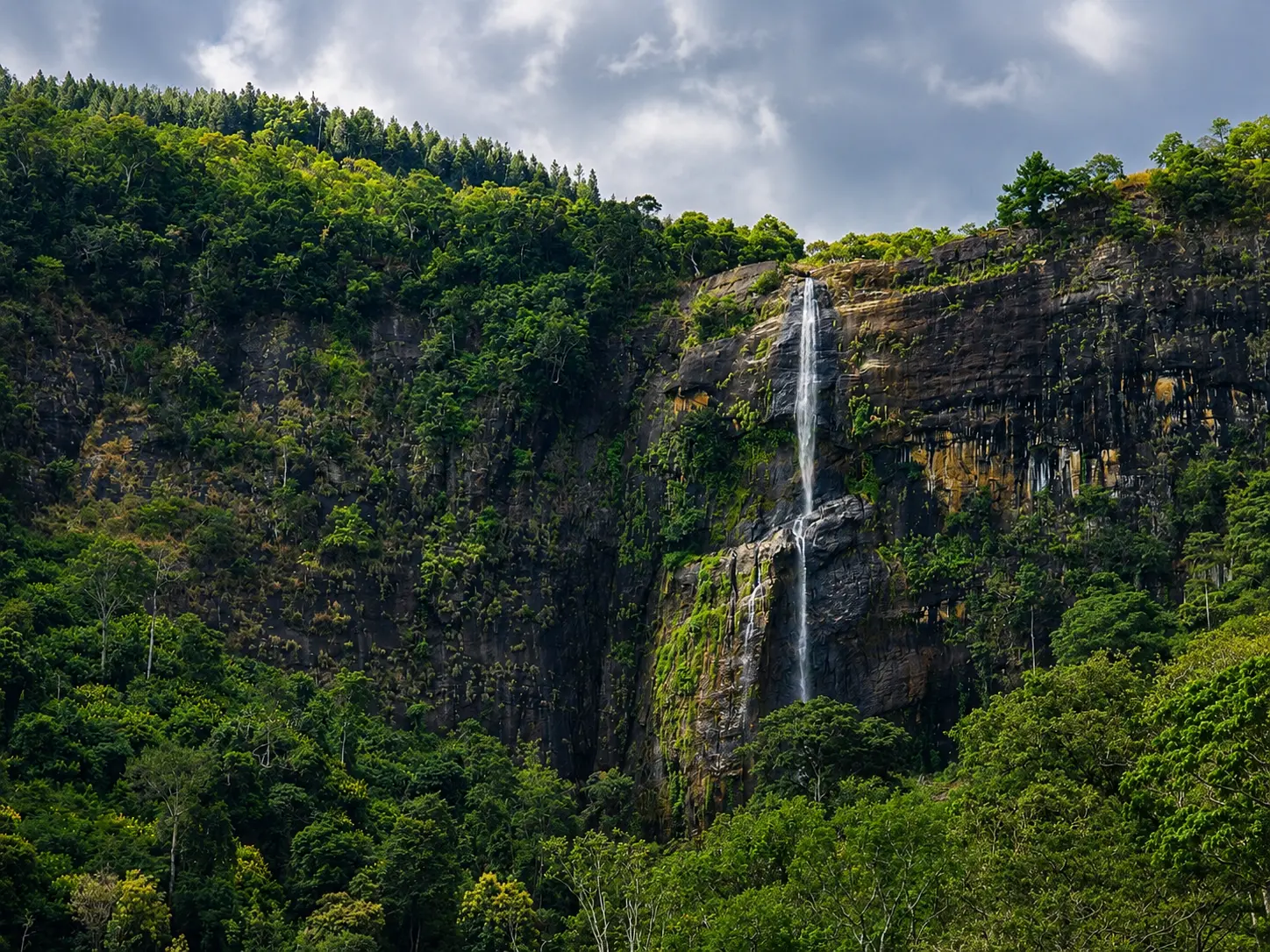
Diyaluma Falls Hiking Difficulty: What First-Timers Should Know
Diyaluma Falls is one of the most talked-about hikes in Sri Lanka’s hill country, and for good reason. At 220 meters, it is the second-highest waterfall in Sri Lanka and ranks among the 619 tallest waterfalls in the world. But before you commit a day of your Ella itinerary to chasing it, one question comes up again and again: how hard is the Diyaluma Falls hike, really?

The honest answer is that it depends entirely on which route you take. One path is a short, manageable stroll suitable for most fitness levels. The other is a steep, rocky scramble that catches a lot of first-timers off guard. This guide breaks down both routes, the terrain you’ll actually face, and what to pack so your first Diyaluma Falls hike goes smoothly. For a broader overview of the waterfall itself, our Diyaluma Falls travel tips guide is a good companion read.
How Hard Is the Diyaluma Falls Hike, Really?
Most visitors rate the Diyaluma Falls hike as easy to moderate, but that rating hides a lot of nuance. The waterfall is formed by the Punagala Oya, a tributary that eventually feeds into the Kirindi Oya, and it drops from a plateau in the Badulla District roughly 6 kilometers from the town of Koslanda. Reaching the top or the base means navigating either grassy plateau paths or a genuinely steep uphill climb over loose rubble, depending on where you start.
Reviewers on Tripadvisor consistently mention the walk as one of the highlights of a Sri Lanka hill country trip but also flag uneven footing and a lack of safety barriers near the edge. In short: it’s not a technical climb, but it’s not a paved boardwalk either. First-timers who show up in flip-flops expecting a flat walk are usually the ones who struggle.
Diyaluma Falls at a Glance
Before diving into route details, here’s a quick snapshot of the numbers that matter most for planning your hike.
| Fact | Detail |
|---|---|
| Height | 220 m (720 ft) |
| Ranking | 2nd highest waterfall in Sri Lanka |
| Nearest town | Koslanda, 6 km away |
| District | Badulla District, Uva Province |
| Distance from Ella | Approx. 39.7 km / 1–2 hours by tuk-tuk |
| Water source | Punagala Oya (tributary of Kuda Oya, which feeds Kirindi Oya) |
| Typical hike duration | 20 minutes (Poonagala) to 45–60 minutes each way (Koslanda) |
| Overall difficulty | Easy–Moderate (Poonagala) / Moderate–Strenuous (Koslanda) |

Two Routes, Two Very Different Difficulty Levels
There isn’t one single “Diyaluma Falls hike.” There are two distinct trailheads, and picking the right one makes a huge difference to how demanding your day will feel.

The Poonagala Route (Upper Trail)
Starting from the small tea village of Poonagala, this is the route most first-timers are steered toward, and for good reason. After a scenic tuk-tuk ride through tea plantations, the trail begins near the Makaldeniya bend and heads downhill through open, grassy terrain toward the upper Diyaluma Falls. The walk itself takes around 20 to 30 minutes each way, with a gentle downhill gradient on the way in and a correspondingly easy uphill return.
The path isn’t signposted, but it’s well-trodden and easy to follow in daylight. The main challenges here are uneven ground, tall dry grass that can scratch bare legs, and exposure to direct sun with little shade. This route delivers you to the natural infinity pools at the top of the falls, making it the preferred option for anyone wanting a swim without a punishing climb.
The Koslanda Route (Lower Trail)
Starting from below the falls near Koslanda, this route is a different experience altogether. It involves a genuinely steep climb over loose, rubble-strewn dirt tracks, past a few small houses, and up a ridge that can take 45 minutes to an hour to summit. Several trail guides describe the road as one of the roughest a tuk-tuk can attempt, and the walking path afterward isn’t much gentler.
The reward is a close-up view of the falls from the base, near the Diyaluma Falls bridge, plus access to the more adventurous upper pools if you continue the loop. This route suits fitter hikers who don’t mind a proper leg workout. For a full breakdown of navigating this side without a guide, the community write-up on how to hike Diyaluma Falls without a guide is worth a look before you go.
| Route | Starting Point | Duration (One-Way) | Terrain | Difficulty | Best For |
|---|---|---|---|---|---|
| Poonagala (Upper) | Poonagala village | 20–30 minutes | Grassy plateau, gentle downhill | Easy–Moderate | First-timers, families, swimmers |
| Koslanda (Lower) | Near Koslanda town | 45–60 minutes | Steep, rocky, loose rubble | Moderate–Strenuous | Fitter hikers, photographers |

What Makes the Terrain Challenging for First-Timers
Even the “easier” Poonagala trail catches people out for a few consistent reasons. Long dry grass hides uneven ground and loose stones, and open sun exposure with almost no shade turns even a 20-minute walk into hard going during the middle of the day. Near the falls themselves, there are no railings or barriers, so the final approach to the viewpoints and pools requires careful footing on wet or sloped rock.
On the Koslanda side, the difficulty steps up. The climb is genuinely steep, the path is loose underfoot, and after rain it becomes slippery enough that several hikers recommend skipping this route entirely in wet weather. If you’re prone to knee or balance issues, the Poonagala trail is the far more forgiving choice.
Do You Need a Guide for the Diyaluma Falls Hike?
This is one of the most common questions first-timers ask, and the honest answer is it depends on the route and your comfort level. Local guides at the Koslanda trailhead often mention elephants in the area, which is true, though sightings are rare and typically occur at night. For a straightforward daytime hike with a companion on either route, most experienced visitors report feeling safe without a guide.
That said, if you’re traveling solo, unfamiliar with off-trail navigation, or hiking later in the day, hiring a local guide is a reasonable precaution. Many tuk-tuk drivers double as informal guides for a small additional fee. For turn-by-turn detail on reaching the top independently, see our guide on how to get to the top of Diyaluma Falls and how to get to Diyaluma Falls from Ella.
Best Time to Visit for Easier Hiking Conditions
Trail difficulty at Diyaluma Falls changes noticeably with the season. Between roughly January and May, drier conditions mean firmer footing on both routes and safer swimming at the pools. During the rainy season, from September through early December, both trails become slippery, and the lower falls pools become too dangerous to enter due to stronger currents.
If your main goal is an easier hike and a swim, aim for the dry season and set out in the early morning or late afternoon to avoid the harshest sun.
Essential Gear and Safety Tips for First-Timers
A few simple choices make the Diyaluma Falls hike noticeably easier, whichever route you choose.
- Wear closed, grippy shoes rather than sandals; the grass and rock sections cause more scrapes than people expect
- Carry more water than you think you’ll need, especially on the exposed Poonagala Trail.
- Download an offline map before you go, since mobile signal is patchy near both trailheads
- Avoid the edge of the falls, particularly on wet rock, since there are no safety barriers
- Check conditions with locals before swimming, and never enter the water during or after heavy rain
- Start early to avoid midday heat and to allow time to enjoy the pools without rushing

For a deeper safety rundown specific to the upper route, read our safety guide for the upper Diyaluma Falls hike.
Swimming at the Infinity Pools: An Added Risk Factor
Part of what makes Diyaluma Falls famous is the string of natural infinity pools along the top of the falls, some perched right at the cliff edge. These pools add a layer of risk that goes beyond the hike itself. During the dry season, the calmer pools are generally safe for a swim, but the pools closest to the edge require caution even then, since a slip near the drop is far more serious than a slip on the trail.
During the wetter months, currents strengthen considerably, and swimming anywhere near the main drop should be avoided entirely. If you want to see what these pools look like before deciding whether to swim, our Diyaluma Falls photo gallery has a good selection of shots from both the upper and lower sections.
Final Thoughts for First-Time Hikers
For most travellers, the Poonagala route offers the best balance: a short, manageable walk that still delivers the full payoff of infinity pools and sweeping valley views. The Koslanda route is a rewarding but genuinely tougher alternative for hikers who want a closer look at the falls from below and don’t mind a steep climb to get there.
Whichever path you choose, treat the lack of barriers and variable trail conditions with respect. Other independent travel accounts, including Julia’s Day Off’s Diyaluma Falls guide and The Common Wanderer’s guide to Diyaluma Falls, echo the same advice: go prepared, respect the season, and the hike rewards you with one of Sri Lanka’s most memorable views. For everything else you need to plan the day, start at our Diyaluma Falls guide homepage.
Frequently Asked Questions
Is the Diyaluma Falls hike suitable for beginners?
Yes, if you take the Poonagala route. It’s a short, mostly flat-to-downhill walk of around 20 to 30 minutes that most fitness levels can manage. The Koslanda route, by contrast, is steeper and better suited to more experienced hikers.
How long does it take to hike Diyaluma Falls?
From Poonagala, expect 20 to 30 minutes each way. From Koslanda, plan for 45 minutes to an hour each way, depending on your pace and the trail conditions.
Do I need a guide to hike Diyaluma Falls?
Not necessarily. Many hikers complete either route without a guide, especially on the Poonagala side. If you’re solo, inexperienced with trail navigation, or hiking near dusk, a local guide is a sensible extra precaution.
What should I wear for the Diyaluma Falls hike?
Closed, grippy shoes, lightweight breathable clothing, and sun protection. Swimwear is worth packing under your clothes if you plan to use the infinity pools.
Is it safe to swim at Diyaluma Falls?
It can be during the dry season and in the calmer pools. Avoid swimming near the cliff edge in high water, and never swim during or after heavy rain, when currents become dangerous.
What is the best time of year to hike Diyaluma Falls?
January to May generally offers the driest, safest trail conditions and calmer pools for swimming. September to early December brings heavier rain and stronger currents.


