
Diyaluma Falls Travel Tips for Every Visitor (2026)
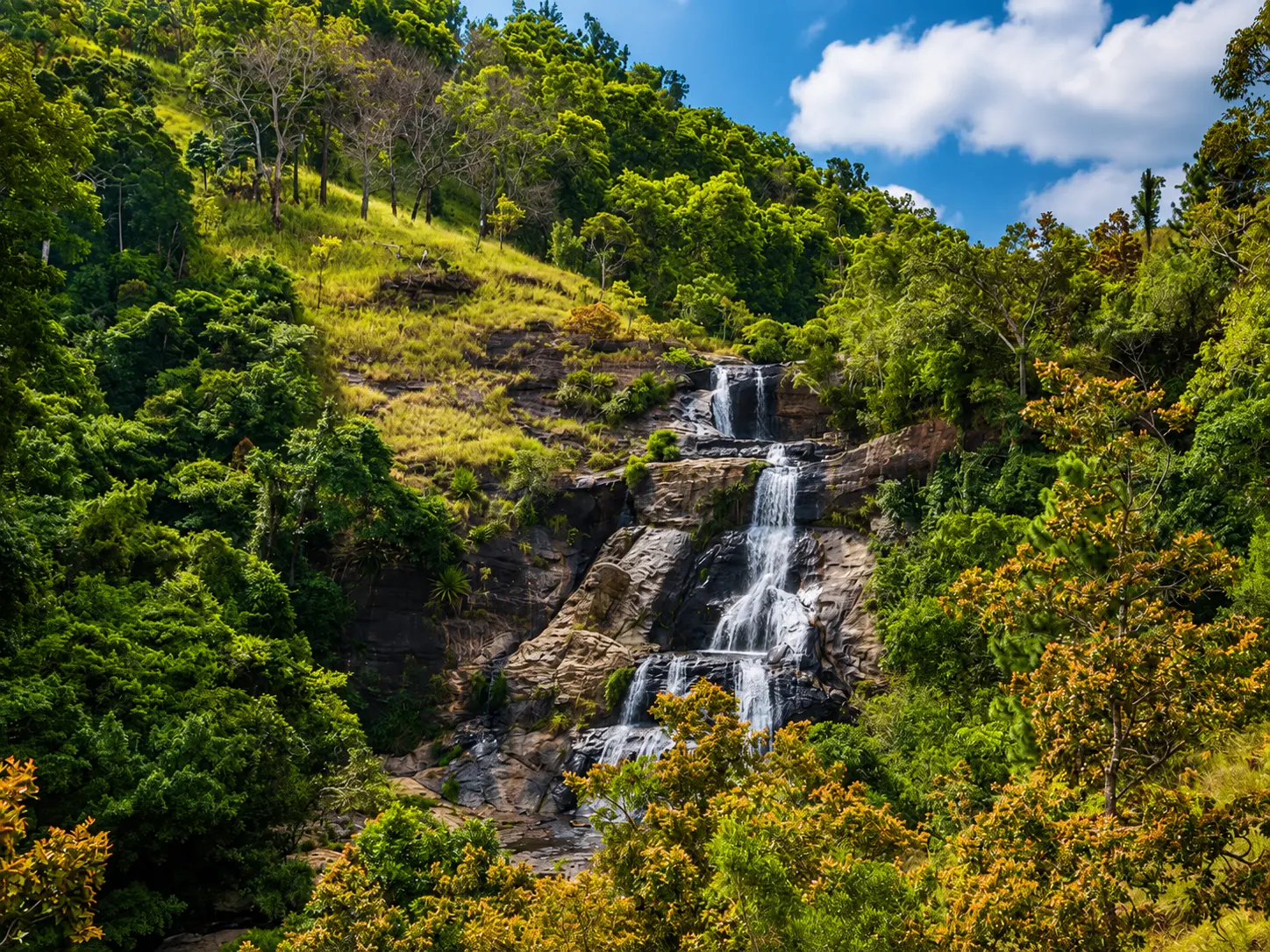
Diyaluma Falls is one of those places that looks impressive in photos and somehow still exceeds expectations in person. At 220 meters, it’s Sri Lanka’s second-highest waterfall, and it’s built a reputation for a very specific reason: natural infinity pools sitting right at the cliff edge, with nothing but open valley beyond them.
This guide pulls together everything a first-time visitor actually needs—where it’s located, how it got its name, how to reach it, what to do once you’re there, and how to stay safe along the way. For deeper dives into any single topic, links to our full guides are included throughout.
Quick Facts About Diyaluma Falls
| Detail | Information |
|---|---|
| Height | 220 m (720 ft) |
| Rank in Sri Lanka | 2nd-highest waterfall |
| Global rank | 619th-highest waterfall in the world (Wikipedia) |
| Location | Badulla District, on the Colombo–Badulla highway |
| Nearest town | Koslanda (6 km away) |
| Distance from Ella | Roughly 39.7 km (about 1–1.5 hours by road) |
| Fed by | Punagala Oya, a tributary of Kuda Oya, which is itself a tributary of Kirindi Oya |

Where Is Diyaluma Falls Located?
Diyaluma Falls sits in Sri Lanka’s Badulla District, right along the Colombo–Badulla highway, about 6 kilometers from the town of Koslanda and roughly 39.7 kilometers south of Ella. Punagala Oya feeds the falls, flows into the Kuda Oya, and then in turn feeds into the larger Kirindi Oya river system.
Our full guide on getting to Diyaluma Falls from Ella provides the exact route, including transport expenses and travel time, and breaks down every option, from tuk-tuks to public buses.
What Does “Diyaluma” Mean?
The name carries real meaning in Sinhalese. “Diyaluma,” or “Diya Haluma,” translates roughly to “rapid flow of water,” though it’s also been poetically rendered as “liquid light.” According to Sri Lankan historian Dr. R.L. Brohier, the name is tied to a piece of local folklore—a tragic story involving a banished chieftain and an attempted rescue that ended at this very cliff, with the falls said to have appeared afterward as a kind of veil over the tragedy (full details on Wikipedia).
Whether or not the legend is taken literally, it adds a layer of atmosphere to a place that already feels a little otherworldly once you’re standing at the top.

How to Get to Diyaluma Falls
Two main access routes exist, and the choice of which one to use often depends on where a tuk-tuk driver is accustomed to dropping visitors.
The Poonagala route is the shorter, easier option. It involves a longer drive from Ella—around 1.5 to 2 hours by tuk-tuk and a roughly 20- to 30-minute downhill hike through grassland to reach the upper falls.
The Koslanda route starts from below the falls and involves a steeper, more strenuous climb, generally taking longer and requiring more effort. It does, however, offer a view of the falls from below at the Diyaluma Falls Bridge along the way.
Our guide on how to get to the top of Diyaluma Falls covers both routes in full, step-by-step detail—including turn-by-turn directions and GPS coordinates.
| Route | Starting Point | Hike Difficulty | Approx. Hike Time |
|---|---|---|---|
| Poonagala Route | Poonagala village | Easier, mostly downhill | 20–30 minutes |
| Koslanda Route | Near Koslanda, below the falls | More strenuous, steep uphill sections | 20–45 minutes |

For a breakdown of the difference between viewing the falls from the road versus hiking to the top, see our comparison guide: Diyaluma Falls: Upper vs. Lower Falls.
Upper Falls vs. Lower Falls
You can really experience Diyaluma from two very different vantage points. The roadside offers a dramatic view of the full 220-meter drop of the lower falls, with no hiking required. You can only reach the upper falls by trail, where you’ll find the natural infinity pools and sweeping views over the valley below.
Full dedicated guides exist for each, Upper Diyaluma Falls and Lower Diyaluma Falls.
Do You Need a Guide?
This is one of the most debated questions among visitors, and the honest answer is usually not. The trail to the upper pools, particularly via Poonagala, is generally easy to follow and shared with other hikers throughout the day. Some tuk-tuk drivers or local guides offer their services at the trailhead, and while it’s a personal choice, most visitors who go with a friend during daylight hours manage the hike comfortably without one.
A step-by-step, guide-free route is laid out in detail in our self-guided hiking directions, based on the exact turns, landmarks, and GPS points used to reach the top independently.
What to Do at Diyaluma Falls
Swim in the natural infinity pools. During drier months, several pools become calm enough for a proper swim, including ones positioned right at the cliff’s edge. It’s widely considered one of the most striking natural swimming spots in the country.
Relax on the surrounding rocks. After the hike up, most visitors take time to simply sit, eat lunch, and take in the view before heading back down. A towel or something to sit on is worth bringing along.
Watch the sunset. Late afternoon light over the valley is one of the most rewarding reasons to time a visit well—though this benefit needs to be balanced against safety advice about wildlife activity later in the day, covered below.
Chat with locals. It’s common to encounter friendly locals at the top, often curious about where visitors are from. It’s a small but memorable part of the experience for many travelers.
Take photos (and drone footage, where permitted). The scale of the falls and the surrounding valley make this one of the most photogenic spots in Sri Lanka’s hill country. Our photo gallery has more inspiration for framing your shots.
Safety at Diyaluma Falls
No safety barriers exist anywhere at Diyaluma, at either the upper or lower falls, so caution near any edge is essential. A few key points:
- Swimming conditions shift by season. Drier months generally offer calmer pools, while the rainy season (roughly September through early December) brings higher water levels and much stronger currents—swimming during this period is not recommended.
- Never dive in headfirst, even into pools that look calm.
- Check conditions with locals on the day of your visit, since things can change quickly.
- Wildlife caution matters, though accounts vary. Some locals describe elephant activity as mostly nocturnal, while others caution against late-afternoon visits specifically. Given the inconsistency, the safest approach is to ask locally on arrival and to avoid lingering into dusk.
- Litter has become a visible issue at some access points — packing out your trash helps keep the site the way it deserves to stay.

You can find a complete breakdown of precautions in our Safety Guide for the Upper Diyaluma Falls Hike.
Best Time to Visit Diyaluma Falls
The dry season, roughly from January through May, is generally considered the best window for a visit, particularly for swimming. Water levels are lower, currents are calmer, and the pools are far safer to enter. The rainy season, from around September to early December, brings a dramatic increase in water volume — impressive to look at, but far too dangerous for swimming.
Combining Diyaluma With the Rest of Your Trip
Diyaluma pairs naturally with the rest of an Ella-based itinerary. Many travelers combine it with Nine Arch Bridge and Little Adam’s Peak into a single well-planned day—our one-day Ella itinerary lays out exactly how to fit all three in without rushing any of them.
Frequently Asked Questions
How tall is Diyaluma Falls?
Diyaluma Falls drops 220 meters (720 feet), making it Sri Lanka’s second-highest waterfall and the 619th-highest in the world.
How far is Diyaluma Falls from Ella?
Roughly 39.7 kilometers, with a typical travel time of 1 to 1.5 hours depending on the route and access point used.
Is Diyaluma Falls worth visiting?
Yes—it’s widely considered one of the best day trips from Ella, thanks to its natural infinity pools, dramatic scale, and relatively uncrowded setting compared to more heavily touristed spots.
Do I need a guide to hike Diyaluma Falls?
Not usually. The trail, particularly via Poonagala, is generally easy to follow, and most visitors manage it comfortably without one during daylight hours.
What does “Diyaluma” mean?
It comes from Sinhalese, roughly translating to “rapid flow of water,” and is tied to local folklore about a tragedy that is said to have led to the falls’ formation.
Is it safe to swim at Diyaluma Falls?
Only under the right conditions. Swimming is generally safer during the dry season and should be avoided entirely during the rainy season, when currents become dangerous.
What’s the best time of year to visit?
January through May is generally recommended, offering calmer water and safer swimming conditions than the rainy season.
Further Reading
For additional first-hand accounts and trail information, these resources are worth a look: Julia’s Day Off’s Diyaluma Falls guide, The Common Wanderer’s Diyaluma guide, Walk My World’s guide to hiking without a guide, the AllTrails page for Diyaluma Falls, and reviews on TripAdvisor.


