
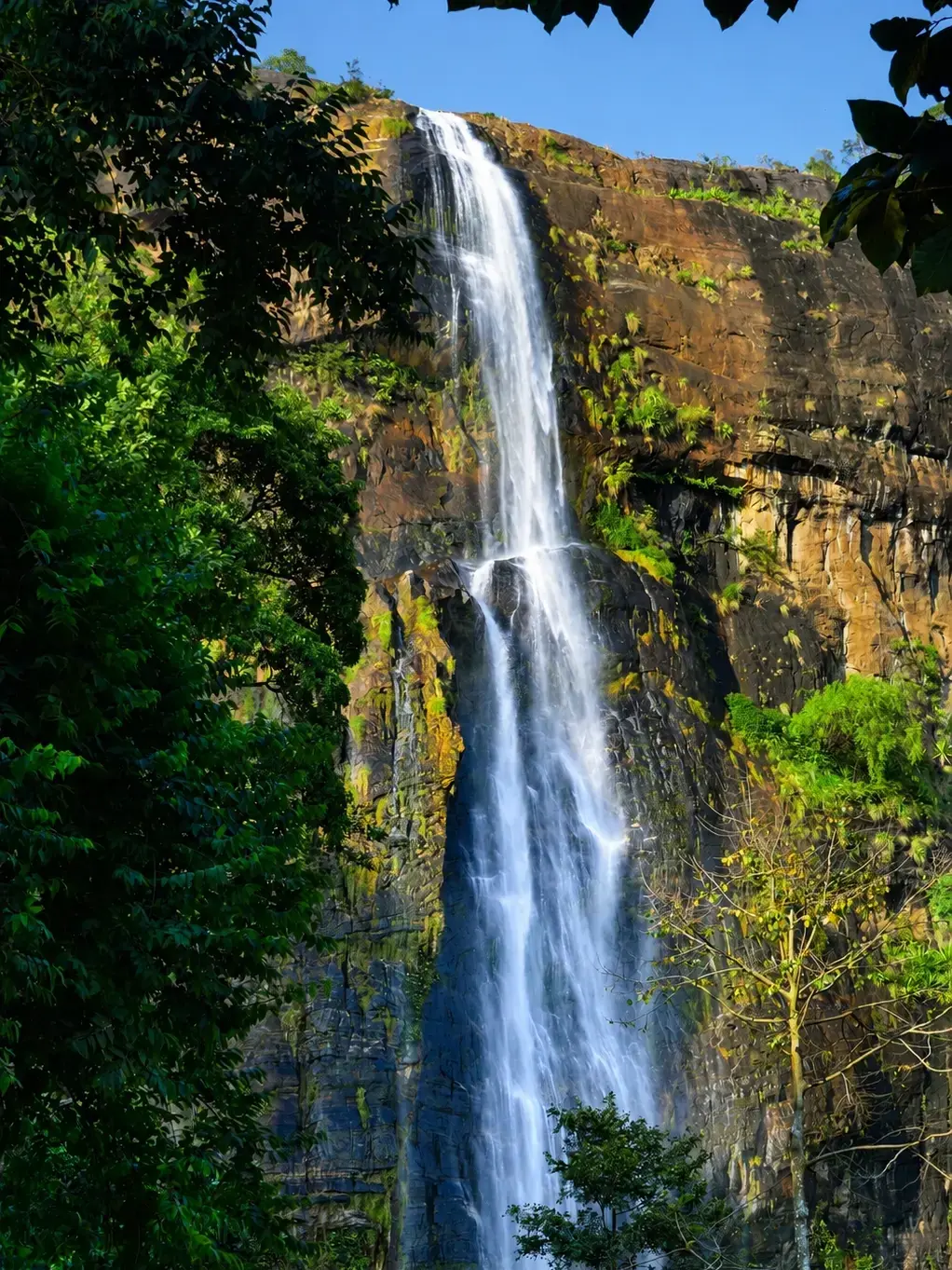
Diyaluma Falls: All You Should Know Before Going
Diyaluma Falls is a 220-meter (720 ft) tall horsetail waterfall—the second highest in Sri Lanka. It plunges in one sheer drop of 220 m down a lush hillside, making it the 619th tallest waterfall in the world. The falls lie in Badulla District on the Colombo–Badulla highway, about 6 km from Koslanda and roughly 39.7 km south of the mountain village Ella. The water comes from the Punagala Oya (a tributary of Kuda Oya, itself a Kirindi Oya tributary).
In Sinhalese, Diyaluma (or Diya Haluma) means “rapid flow of water” or “liquid light.” A local legend tells of a banished chieftain and his beloved: when the young woman died trying to climb up to him, the gods sent forth the waterfall to veil the tragedy in “watery light,” hence the name. Today Diyaluma Falls is famous for its two key experiences: enjoying the upper pools (natural infinity swimming pools) and viewing the dramatic 220 m drop at the base.

Diyaluma Falls pours 220 meters down a forested cliff. Visitors often stop at the roadside to marvel at the full drop.
Location and How to Get There
Diyaluma Falls is in Sri Lanka’s Uva Province, in the highlands of Badulla District. The nearest town is Koslanda, about 6 km to the west. The main access is via the Colombo–Badulla highway: after Ella (39.7 km to the north), take the road south through tea estates to Koslanda, then east. From Ella, the journey is about 1.5 hours by road. Many travelers base themselves in Ella or Haputale and hire a tuk-tuk or car for the day. Expect to negotiate a return tuk-tuk fare around LKR 4,500–6,000.
Transport Options: Some choose a taxi or private car (more comfort, ~25,000–30,000 LKR one-way from Colombo) or even a motorbike rental for adventure. Buses run along the main road to Wellawaya and on to Koslanda; from there a short tuk-tuk ride (LKR 1000–1500) reaches the falls area. Use navigation apps cautiously: in rural sections the trailheads may not appear on GPS, so download offline maps or carry local directions.
| Quick Fact | Details |
|---|---|
| Height | 220 m (720 ft) total drop; 2nd highest in Sri Lanka |
| Location | Badulla District, 6 km east of Koslanda on Colombo–Badulla Hwy |
| Watercourse | Punagala Oya (Kuda Oya → Kirindi Oya) |
| Best Season | Dry season (Jan–Apr) – pools are calm and swimmable |
| Entry Fee | Free to visit, with a small 350 LKR fee per person for upper falls pools |
For example, a popular route is to hire a tuk-tuk in Ella and tell the driver you want to hike the “Upper Diyaluma.” Some drivers may know Poonagala village as the drop-off for the shorter trail. Others take the long road via Haputale or even start from below at Koslanda. The beautiful drive through hill-country tea plantations makes the journey scenic.
Hiking to the Upper Diyaluma Pools

The big highlight of Diyaluma Falls is hiking up to the top and swimming in the natural infinity pools. There are two main trails to reach the upper pools: a shorter route from Poonagala/Koslanda and a rough trail from Ella via a dirt road.
- Poonagala Route (via Koslanda): This is the most common path. From Koslanda, head east on a local road toward Poonagala village and the Makaltheniya bend. There is a small trailhead marked by a path cutting through long grass. Hikers will walk downhill for about 20–30 minutes through uneven terrain. Proper shoes are recommended (parts are rocky and overgrown) and carry water for the humid hike. After about half an hour, the upper Diyaluma Falls and its ledges come into view. At this point, the trail splits: going right leads up to the highest pools; going left descends toward the lower falls.
- Ella Back-Road Route: A second approach is a dirt track that turns off the Colombo–Badulla highway about 5 minutes before the lower Diyaluma viewpoint. This path is rough and usually requires a sturdy tuk-tuk or jeep to drive on. After a bumpy ride (~10-15 minutes), you reach a small settlement. From here a footpath winds through houses and then up a ridge with steep, rocky sections. After about 30-45 minutes of hiking, you arrive on the ridge. At the ridge edge you hear water and can walk either to the right toward smaller upper pools or to the left toward the very top of the falls. Guides sometimes promote this route, but experienced hikers can do it independently (the local WalkMyWorld blog provides a step-by-step “no-guide” trail guide).
Both trails eventually converge at the upper pools. In dry weather the hike takes 20–30 minutes from the trailhead. From the pools, the rock is smooth and banded by smaller cascades; the climb between pools can get slippery. Many hikers continue a loop down to the lower falls (an additional 10–20 minute descent) for views of the entire drop.
Natural infinity pools at the top of Diyaluma Falls offer incredible valley views. In the dry season, these emerald pools are calm enough to swim in, though always take precautions.
What to Do at Diyaluma Falls

- Swim in the Upper Pools: The main attraction is the series of rock pools on the upper ledges. These pools are literally natural infinity pools: you can float at the edge of a cliff with a 220m drop behind you. The largest, safest pool is right near a big black boulder in the upper tier. In the dry months (Jan–Apr), the water is usually clear and calm, making swimming and even jumping between pools possible. Remember to enter feet-first and never dive (underwater rock depth is uneven).
- Relax on the Cliff Ledge: A popular pastime is to lounge on the flat rocks around the pools. Many visitors pack a picnic or snacks to enjoy at the top. The panoramic view over the hill country and Ella Valley is spectacular. A few of our favorite moments include watching the sun set from the edge of the upper falls or simply sitting with a cool drink as the waters cascade around you. (One blog even suggested chatting with friendly locals who often visit the falls!)
- View the Lower Falls: Even if you skip the swim, the lower viewpoint is worthwhile. From the road or after the hike down, you see the full 220 m white ribbon drop of Diyaluma framed by jungle. This is a great spot for photographs or a quick rest. A short scramble down boulders can bring you closer to the spray (but swimming in the bottom pool is not recommended — currents are strong).
- Photography: Diyaluma is extremely photogenic. The early morning and late afternoon light are best for photos (avoiding midday glare). At sunrise or sunset, the mist and sunlight on the falls can be magical. The roadside view of the lower falls (near the small bridge) gives you a “classic” full-height shot, while the pools have more dramatic wide-angle views. Remember to protect your camera from spray and wear sturdy shoes for all shooting spots.
- Chat with Locals: Many travelers note the friendly atmosphere around Diyaluma. Locals often run small kiosks selling snacks or serve as informal guides. Stories abound of visitors sharing conversation and coconuts with people at the falls. Embracing this cultural exchange is part of the experience; just be respectful of the site and any posted rules.
Safety and Preparation
Diyaluma Falls is beautiful but wild. There are no railings or fences at the top or bottom. The pool edges drop off sheerly. Follow these safety tips:
- Stay back from edges: Keep at least a couple of feet from steep drops when standing or sitting. The rocks can be slippery, especially if wet.
- Check weather & water levels: Swimming is only safe when the flow is moderate. Never attempt to swim during the monsoon (roughly Sept–Nov). Even in summer, ask locals or guides if conditions are good.
- No diving: Always enter pools feet-first. Underwater boulders and variable depth make diving dangerous.
- Wear proper shoes: The hiking trail and rocks are uneven. Sports sandals or sneakers are best.
- Bring water & snacks: There are no shops atop the falls. Hydrate before and during the hike.
- Wildlife caution: Although rare, wild elephants have been spotted in this area. Avoid hiking at dawn/dusk alone, and make noise on the trail. Guides or drivers can advise if any elephant activity is reported.
- Guides: Hiring a local guide is optional. TripAdvisor and other visitors mention knowledgeable guides (e.g., Saman and others) who enhance the experience. However, the paths are easy to follow by yourself during daylight. If uncomfortable, a guide can help navigate trails and point out safe pools.
A traveler relaxes on the rocks by an upper Diyaluma pool, with the Sri Lankan highlands unfolding below. Always ensure you have gear and water and are aware of slippery edges.
Best Time to Visit
The best time to see Diyaluma Falls is during Sri Lanka’s dry season (January to April). In this period, rainfall is lower, so the upper pools become calm and swimmable. The trail is also safer when dry. In contrast, the monsoon season (roughly September to early December) brings heavy flow: the pools can become treacherous and the hike muddy. If visiting outside the dry window, simply don’t attempt to swim; the views are still dramatic, but stay extra cautious.
Mornings or late afternoons are ideal. Trekking in the cooler early hours (around 7-9 AM) means less heat and fewer crowds. Sunrise light can be beautiful on the falls. Some visitors even time their hike to catch the sunset from the top—a truly memorable sight as the valley turns golden.
Upper vs. Lower Falls Comparison

The Diyaluma site actually has two main sections. The tables below highlight the differences:
| Aspect | Upper Diyaluma Falls (Top Pools) | Lower Diyaluma Falls (Base Viewpoint) |
|---|---|---|
| Key feature | Series of natural infinity pools at cliff edge | The full 220 m drop visible from the road |
| Access | ~20–30 min hike from Poonagala trailhead | Very short walk from roadside parking (Diyaluma Falls Bridge) |
| Swimming | Generally safe in dry season (calm pools) | Not recommended (strong currents in plunge pool) |
| Crowds | Fewer visitors (need effort to reach) | More visitors stop here for photos |
| Trail difficulty | Moderate uphill/downhill trail (wear shoes, bring water) | Easy flat path (kid-friendly), though some slippery rocks |
Read more: Diyaluma Falls Upper vs Lower: Essential Guide 2026
Accommodation
Diyaluma Falls is a day-trip destination; no lodging is available at the falls. Most travelers stay in Ella or nearby Haputale and make an early excursion. Ella offers everything from guesthouses to midrange hotels. For budget stays, options like Ella Inn or Eden View Ella (around 6,000–8,000 LKR/night) are popular. If you have more time, consider combining Diyaluma with overnight treks or tea plantation stays in the region. Check more Top Hotel Deals in Ella.
Tables of Helpful Information
| Transport | Description | Approx. Cost (Roundtrip) |
|---|---|---|
| Tuk-Tuk or Taxi | Easiest/flexible: driver negotiates route (often via Poonagala) | LKR 4,500–6,000 total |
| Rented Scooter/Motorbike | Full freedom; scenic route, but require experience | ~LKR 3000/day + fuel |
| Private Car (driver) | Comfortable, works with group; scenic drive | ~LKR 25k–30k one way (Colombo) |
| Public Bus + Tuk-Tuk | Budget option: bus to Wellawaya/Koslanda, then tuk-tuk | ~LKR 1,500–3,500 per person |
| Tip | What to Know |
|---|---|
| Wear gear | Good hiking shoes, swimwear under clothes, a sunhat, sunscreen, and a quick-dry towel are recommended. |
| Safety | No railings. Keep back from the edge and never dive. Swimming is only safe in dry months. |
| Time needed | Plan half a day (3–5 hours): drive from Ella (~1–1.5 h), hike (~0.5 h), chill/swim (~1–2 h), and return. |
| Guides | Guides are optional. Locals can guide for a fee (~1500 LKR), but the trail is straightforward if you have a map. |
| Local tips | Ask locals about current conditions. They may know if elephants are nearby or which pools are safe. |
FAQs (Frequently Asked Questions)
What is Diyaluma Falls?
Diyaluma Falls is a 220-meter (720 ft) waterfall in Sri Lanka, the second-highest in the country. It’s known for its high drop and unique rock pools at the top.
Where is Diyaluma Falls located?
It’s in Badulla District, Uva Province, on the Colombo–Badulla highway. The falls are about 6 km east of Koslanda and ~39.7 km south of Ella.
How do I reach Diyaluma Falls from Ella?
Most travelers hire a tuk-tuk or car in Ella. The road trip takes about 1–1.5 hours through scenic hills. Alternatively, buses go to Wellawaya/Koslanda and then a short taxi ride.
Is there an entry fee?
Viewing the falls is free. However, if you want to enter the upper falls pools, there is a small local fee (currently ~350 LKR per person).
Do I need a guide to hike?
No, a guide is not required. The trails are visible and well-trodden. Guides are available for hire (they can share local knowledge and help with safety), but many do the hike independently using maps or following others.
How difficult is the hike?
The Poonagala trail is moderate: about 20–30 minutes each way, mostly downhill going and uphill returning. Wear sturdy shoes and carry water. The alternate Ella trail is longer and rougher (~45–60 min) and involves steeper climbs. Both are doable for reasonably fit people.
Can I swim at Diyaluma Falls?
Yes, but only under safe conditions. Swimming is best during the dry season (Jan–Apr) when flows are low. The natural pools at the top allow swimming. Never swim during or right after heavy rains, as currents become dangerous. The lower falls pool is not safe for swimming due to strong currents.
When is the best time to visit Diyaluma Falls?
Dry months (late December to April) are ideal. Early morning or late afternoon hours offer better light and cooler temps. Avoid the monsoon season (Sept–Nov) for swimming.
What precautions should I take?
Bring water, snacks, and sun protection. Mind your footing (rocks can be slick) and stay away from cliff edges. Check weather/locals for safe swimming tips. Dress modestly if you need to walk through villages.
Any nearby attractions to combine with Diyaluma?
Yes. Diyaluma is often paired with Ravana Falls (on the same highway) or the famous Nine Arch Bridge near Ella. The DiyalumaFallsGuide site suggests planning it as a day trip from Ella, which covers both Ravana and Diyaluma.


