
Upper Diyaluma Waterfall: The Complete Guide
While the view from the road gives you the full-height drama of Diyaluma’s 220-meter plunge, it’s the top of the falls that most travelers are really chasing — a series of natural infinity pools carved into the rock, perched right at the edge of a cliff, with the valley stretching out below. This is Upper Diyaluma Waterfall, and it’s the reason this waterfall has become one of the most talked-about swimming spots in Sri Lanka’s hill country.
This guide covers everything specific to the upper falls — the hike, the pools, safety considerations, and how to make the most of your time at the top.
What Is Upper Diyaluma Falls?
Upper Diyaluma refers to the area at the very top of the falls, where the Punagala Oya river spreads out across a series of natural rock basins before spilling over the main 220-meter drop. Over time, flowing water has carved these basins into smooth, swimmable pools, several large enough to comfortably float in, all positioned right at the cliff’s edge with sweeping views over the valley below.
This is different from the roadside “Lower Diyaluma” viewpoint, which shows you the full height of the falls from the ground looking up but offers no access to the pools or swimming. The upper pools require a proper hike to reach, but they’re the part of Diyaluma that shows up in nearly every striking photo you’ve seen of this waterfall.

Getting to the Top: The Hike
There’s no shortcut to the upper pools — you’ll need to hike, and the route typically starts from a trailhead near the base of the falls or a nearby access point along the highway.
Duration: Most hikers reach the top in 20 minutes to an hour, depending on your starting point, pace, and fitness level.
Terrain: Expect a mix of open grassland, some loose rock, and a final stretch of rockier, steeper ground as you near the pools. It’s not a technical climb, but it does involve real elevation gain and uneven footing in places.
Difficulty: Moderate. Reasonably fit travelers shouldn’t struggle, but this isn’t a flat, casual walk — sturdy footwear and a bit of stamina go a long way.
Guides: A guide isn’t required, since the trail is generally well-marked and often shared with other hikers, but many local drivers offer informal guiding and can point out current safe swimming spots — genuinely useful given how much conditions can change with the seasons.
Sun exposure: Much of the trail is open, with limited shade, so starting early in the day makes for a noticeably more comfortable hike.
The Pools at the Top
Once you reach the summit area, you’ll find several distinct pools of varying size and depth, carved naturally into the rock. Some sit further back from the edge and feel calmer and more enclosed, while others sit right at the lip of the falls, offering the dramatic “infinity pool” effect that’s made this spot so photogenic.
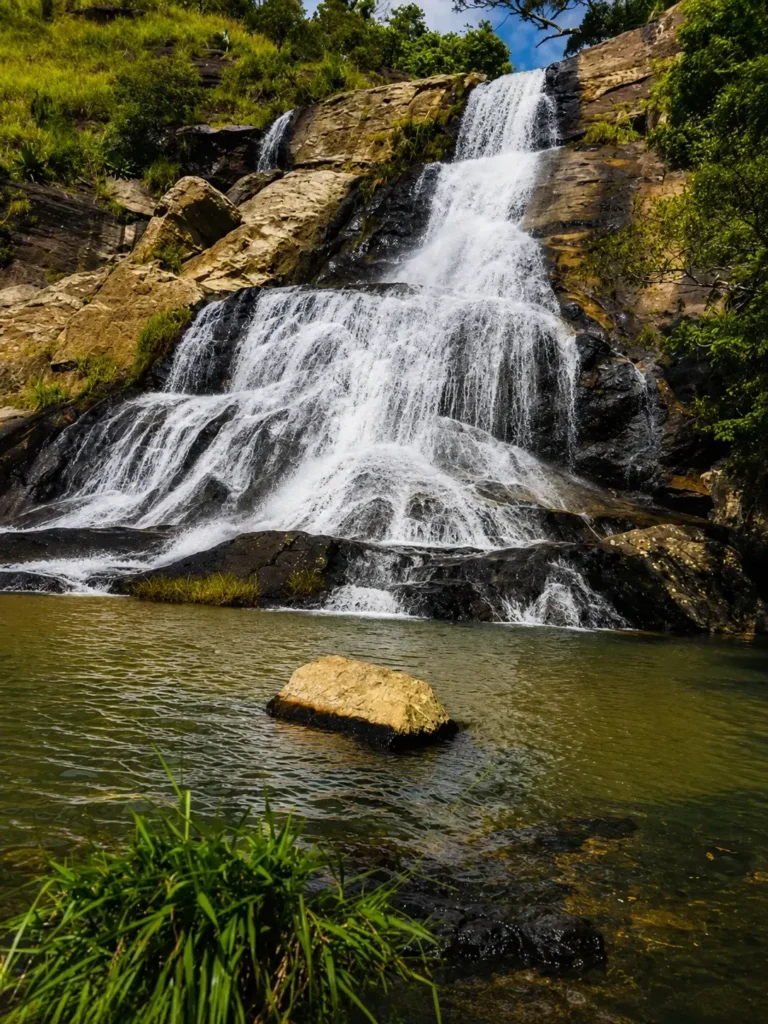
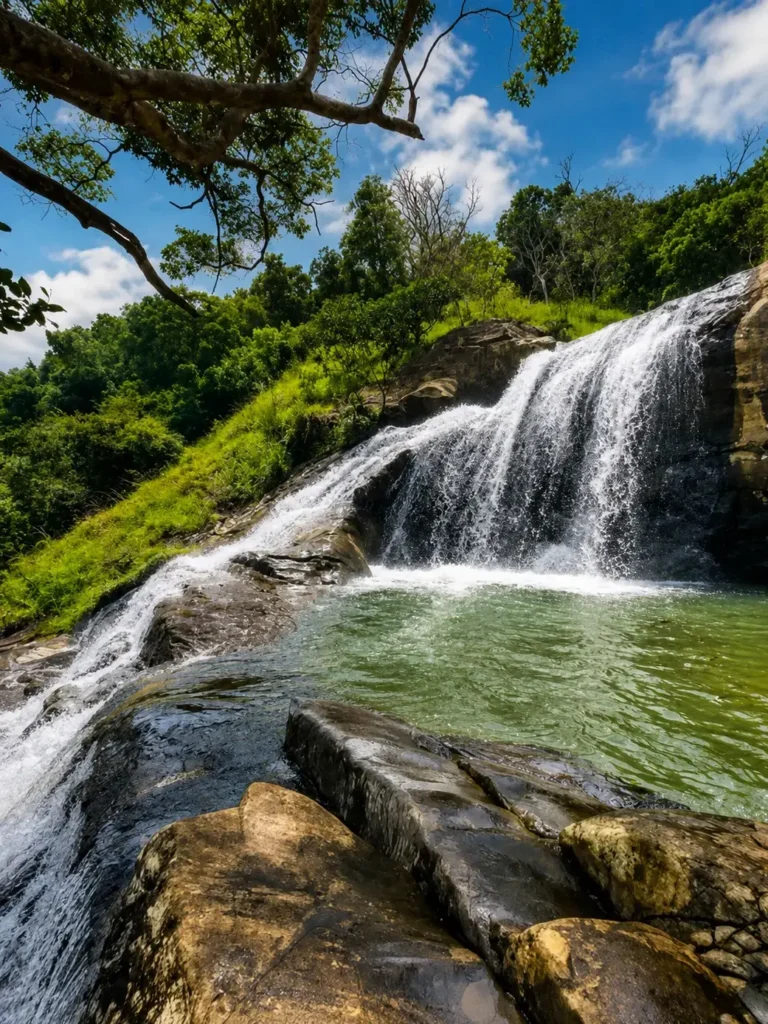
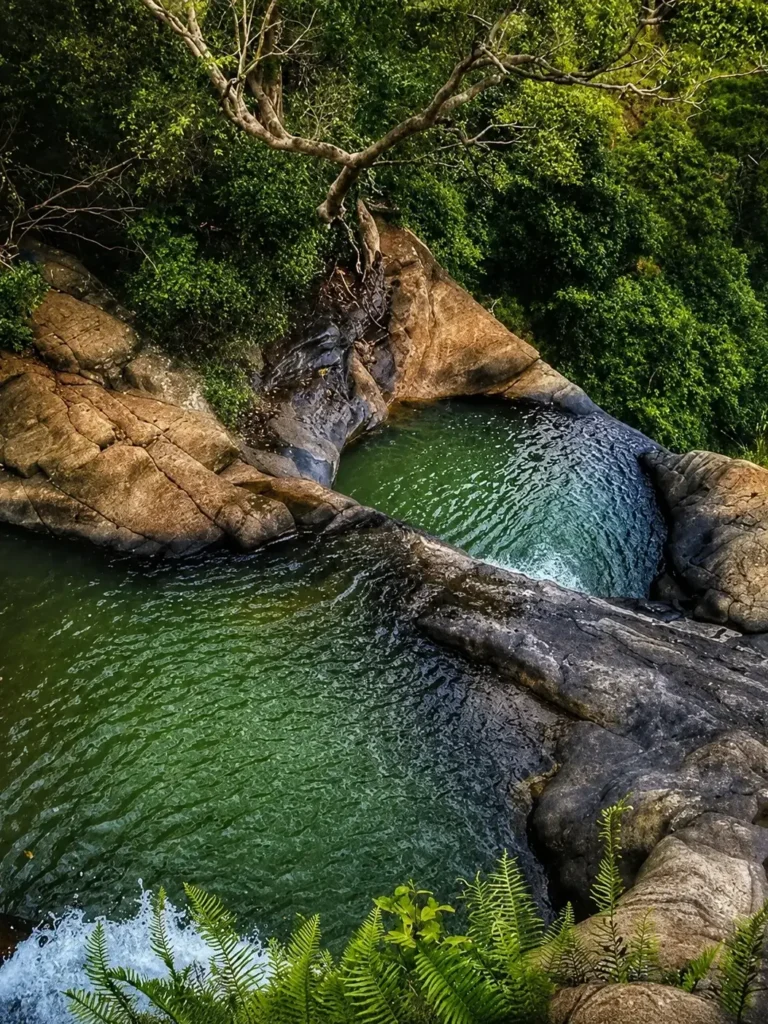
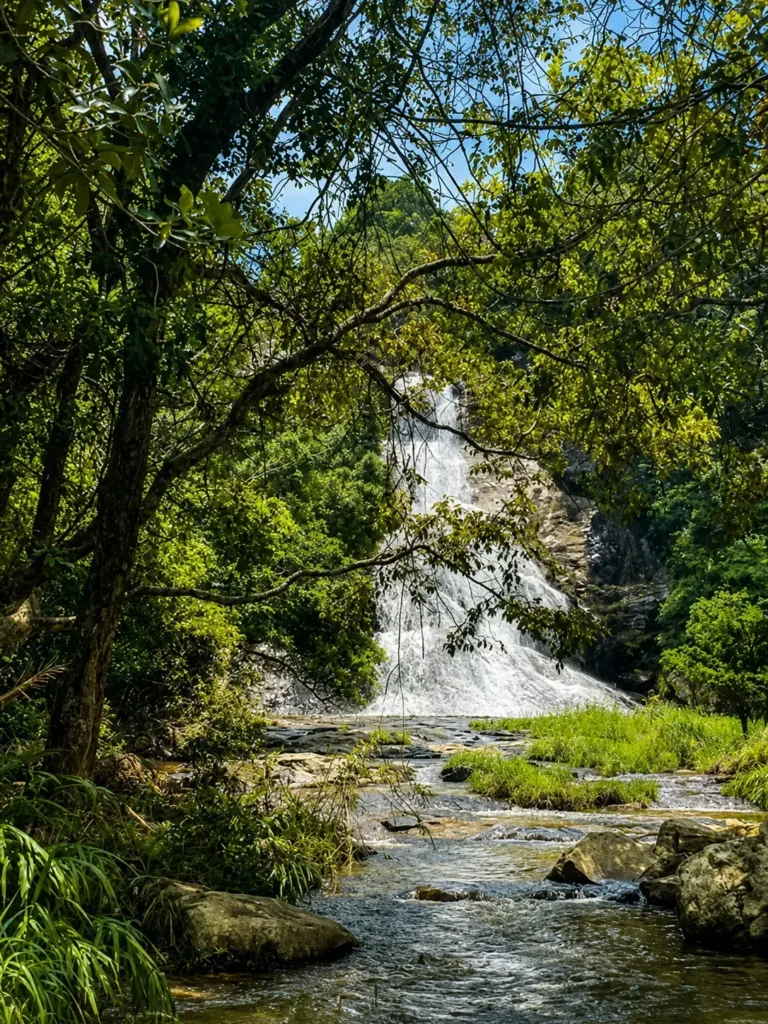
Water clarity and pool depth vary by location and season, and not every pool is safe to swim in at every time of year — more on that below. What makes the upper pools genuinely special isn’t just the swimming itself, but the setting: uninterrupted valley views, open sky, and the sound of the falls dropping away just beyond the rocks.
Is It Safe to Swim at Upper Diyaluma Falls?
This is the single most important thing to understand before you go.
|
Season |
Conditions |
Safe to Swim? |
|---|---|---|
|
Dry season |
Lower water levels, calmer currents in most pools |
Generally yes, in the pools known to be calm — but always check locally on the day |
|
Rainy season (roughly September–early December) |
Higher water volume, much stronger currents |
Not recommended — conditions can become genuinely dangerous, even in pools that look calm |
|
Transitional periods |
Conditions can shift quickly after rain |
Ask locally before entering any pool — don’t assume based on the weather at your hotel |
A few additional safety points that matter specifically at the top:
What to Bring for the Upper Falls Hike
Best Time to Visit the Upper Pools
Aim for the dry season if swimming is your priority, and try to arrive earlier in the day. Morning light is softer for photos, temperatures are cooler for the hike up, and you’ll typically have the pools to yourself before other visitors arrive later in the day. Avoid visiting during or shortly after heavy rain, even outside the official rainy season, since water levels and currents can spike quickly.
Photography at the Top
The upper pools are one of the most photogenic spots in Sri Lanka’s hill country, largely because of the natural “infinity pool” effect — a still pool of water with nothing but open valley behind it. A few tips:
- Shoot in the early morning or late afternoon for the most flattering light.
- Get low near (but never too close to) the pool’s edge to emphasize the sense of height and openness.
- If you have a drone, aerial shots capture the scale of the falls and valley in a way ground shots can’t — just check local rules on drone use before flying.
- Be mindful of other visitors’ safety and privacy, and never encourage anyone to lean out further than is safe for the sake of a photo.
Is the Hike to Upper Diyaluma Waterfall Worth It?
For most travelers, yes — this is widely considered the highlight of a Diyaluma visit. Swimming in a natural infinity pool with an open valley view is a rare experience, and one that few other waterfalls in Sri Lanka offer in quite the same way. The trade-off is the effort of the hike and the need to time your visit around safe conditions, but for most visitors who make the climb, it’s the part of the trip they remember most.
If you’re short on time or not up for the hike, the roadside lower falls still give you an impressive view of the same waterfall — but if you have the time and energy, the top is where Diyaluma truly earns its reputation.
Final Tips for Visiting Upper Diyaluma Waterfall
- Start the hike early to beat the heat and have the pools to yourself
- Always check current safety conditions locally before swimming — don’t rely solely on the season alone
- Bring proper footwear; flip-flops aren’t ideal for the trail
- Pack out any trash — this is a natural, largely unmanaged site
- Combine your visit with the roadside lower falls view and, if time allows, a stop at Ravana Falls on the same route
Upper Diyaluma Falls is the payoff at the end of the climb — a place where the reward genuinely matches the effort. Whether you’re there for the swim, the view, or the photos, it’s one of the most memorable stops you’ll make in Sri Lanka’s hill country.
Latest Posts About Diyaluma Falls
- Ravana Falls vs Diyaluma Falls: 10 Things Travelers Should Know

- 25 Essential Diyaluma Falls Tips Before You Go

- Diyaluma Falls Hiking Difficulty: What First-Timers Should Know

- Best Time to Visit Diyaluma Falls: Weather Guide

- Diyaluma Falls Infinity Pool: Everything You Need to Know

- Diyaluma Falls Travel Tips for Every Visitor (2026)